ServicesSedation Dentistry
Sedation Dentistry in Somerville
Some kids cannot sit still or stay calm long enough for a filling or crown. Sedation lets us finish the work carefully, in fewer visits, so small problems get treated before they grow and your child's next appointment starts from a better place.
Why we use sedation, and when
We do not reach for sedation by habit. It comes up when fear, a young age or a strong gag reflex would stop us from working precisely, or when several teeth need care and splitting it into many short visits would mean more anxiety and more weeks with decay still active.
The reasoning is about how long the work lasts. A filling placed on a dry, clean tooth, or a crown seated with a tight margin, can protect that tooth for years. When a child is crying and moving, saliva gets into the prepared tooth, the seal suffers, and the restoration is more likely to leak and need replacing. Keeping your child calm protects the quality of each repair.
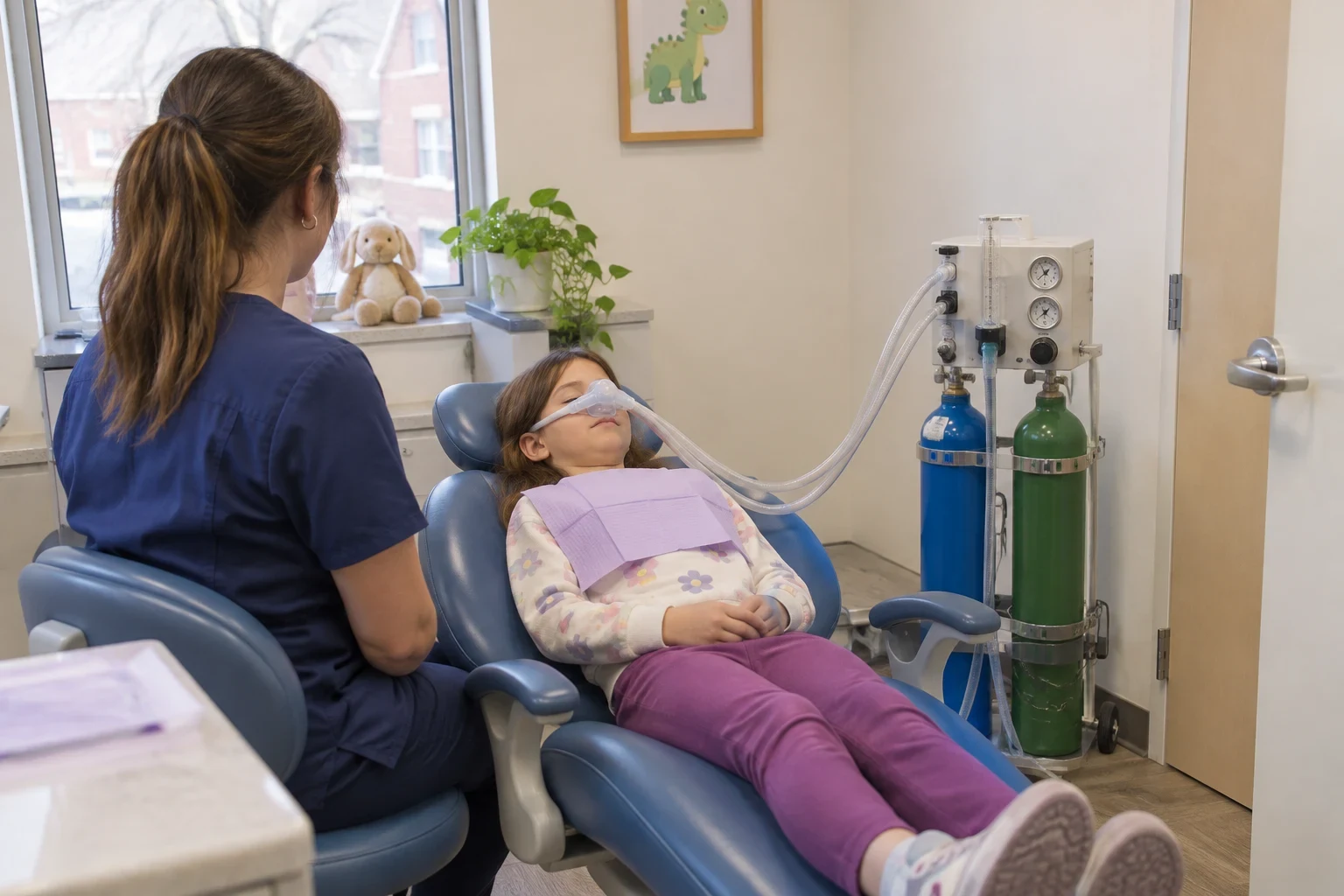
Many kids do well with the lightest choice, nitrous oxide breathed through a small nose piece. Some need a deeper level. We match the option to your child's age, health and treatment plan, and walk you through the reasons.
What sedation care includes
- Health history check
- Before planning anything, we review medications, allergies, past illnesses, snoring or sleep-disordered breathing, and any recent cold. Large tonsils or nasal congestion can affect the airway, which changes which option is safe for your child.
- The right level for the treatment
- Nitrous oxide takes the edge off while your child stays awake and responsive. Deeper levels are kept for longer or more complex treatment, and we explain why we are suggesting one over the other.
- Prep instructions in writing
- You get a written sheet covering when food and drinks must stop, what your child should wear and what to bring. The fasting window matters because a relaxed child with a full stomach is more likely to vomit.
- Continuous monitoring
- Breathing, oxygen saturation and heart rate are tracked from start to finish. Someone is watching your child the entire time sedation is in effect.
- Supervised recovery
- Your child rests with us until fully alert and steady enough to leave. Before you head out, we go over eating, activity and what to watch for the rest of the day.
Signs your child may need sedation
Panic in the chair
Crying, clamping the jaw or trying to climb out makes careful work impossible. Pushing through can teach a child to dread every future visit.
Several teeth need work
When cavities show up on multiple teeth, handling them together under sedation can mean one or two visits instead of five or six.
Very young age
Toddlers with decay often cannot follow instructions like opening wide and holding still. Sedation keeps them safe while the tooth is treated.
A strong gag reflex
Some kids gag on instruments, cotton rolls or the suction tip. Relaxing that reflex lets us keep the tooth dry, which matters for how well a filling bonds.
Sensory or developmental needs
Bright lights, drill noise and touch can overwhelm some kids. We talk with you about what helps and plan around it.
What moves the price of a sedation visit
A sedation visit is priced in two parts: the sedation itself and the dental work it makes possible. Before the appointment you get both laid out line by line, so you can see what each piece costs. Most insurance plans are accepted, along with the CareCredit Patient Payment Plan, and you can also pay by MasterCard, Visa or Discover.
Which level of sedation
Nitrous oxide needs only a nose piece and a short wind-down afterward. Deeper sedation calls for more prep, closer monitoring and a longer recovery period in the office.
How long your child is in the chair
Treating four teeth takes more sedated time than treating one. The number of teeth and how involved each one is drive the length of the visit.
The dental work being done
A filling, a pediatric crown, a root canal on a baby tooth or an extraction each has its own fee, added to the sedation.
What your plan covers
Insurers set their own rules on pediatric sedation, and some cover it only for certain ages or treatments. We will help you read your plan's benefits, but coverage is decided by the insurance company, not by us.
How a sedation visit works
- 1
Consultation and plan
We examine your child, review X-rays and health history, and lay out the treatment and the sedation level we suggest. You can ask questions before anything is booked.
- 2
Preparing at your end
You follow the fasting and medication instructions we give you. Loose, comfortable clothes and a favorite blanket or toy help.
- 3
Treatment day
We settle your child, start the sedation and confirm they are relaxed before we begin. While monitoring continues, we complete the planned fillings, crowns or other work.
- 4
Recovery
Your child rests until they are responsive and steady. Kids who had nitrous oxide usually recover within minutes; deeper options take longer.
- 5
Follow-up
We check the treated teeth at the next visit and keep up regular care through exams and cleanings, so the work done under sedation keeps protecting your child's teeth.
Sedation dentistry questions from parents
Is sedation safe for kids?
Safety starts before the visit, with a review of your child's health history, medications and the work planned. In the chair, a pulse oximeter tracks oxygen and heart rate while we watch breathing continuously. When something in the history gives us pause, such as a recent illness, we say so plainly and change the approach or the date.
Will my child be asleep?
With nitrous oxide, no. Your child stays awake, calm and able to talk with us. Deeper levels bring real drowsiness, and before the visit we describe what that looks like for the option we suggest.
Why can't my child eat beforehand?
Sedation loosens the protective reflexes that keep food and liquid out of the airway. If the stomach is empty, there is far less risk of vomiting and inhaling it. Stick to the timing on the instructions we send, and call us if your child snacks by accident so we can decide whether to go ahead.
How will my child feel afterward?
Kids who had nitrous oxide are usually back to themselves within a few minutes. After a deeper level, expect drowsiness or wobbly balance that can last into the afternoon. Plan a calm day with an adult close by, skip playgrounds and bikes, and offer soft foods and plenty to drink.
Will my child always need sedation?
Most kids do not. After the backlog of treatment is cleared, routine exams, cleanings, sealants and fluoride treatment keep each visit short and easy. Plenty of children who were sedated once handle their checkups awake and relaxed later on.
Talk with us about calmer treatment
Tell us what your child needs and what has been hard at past visits. We will explain the options and set up a consultation.