Pediatric Dentistry in Somerville, Planned for the Long Run
From a baby's first tooth to a teen's last molar, we keep smiles healthy with checkups, cleanings, sealants and fluoride varnish. If decay gets in, fillings, pediatric crowns or a careful extraction stop the damage so each baby tooth can hold its place until the adult tooth arrives. Families come from Cambridge, Medford and beyond.
What Shapes the Cost of Your Child's Care
Preventive visits are the most predictable part of children's dentistry. Costs change mostly when treatment is needed, and they depend on the specific teeth and how far a problem has gone. Here is what moves the number.
Before any treatment, you receive a written estimate built from the exam findings and your coverage. Payment can go on Visa, MasterCard or Discover, through most insurance plans, or over time with the CareCredit Patient Payment Plan.
- Your insurance plan
- Many plans cover cleanings, exams, fluoride and sealants at a high level and restorative work at a lower one. We check your benefits so the estimate reflects your plan, not a general guess.
- How deep the decay goes
- A shallow cavity in the outer enamel needs a small tooth-colored filling. Decay that reaches the pulp may need a pulp treatment and then a crown, which is more involved.
- Crown material
- Stainless steel crowns are durable and suit back molars. Tooth-colored zirconia crowns look natural on front teeth but take more preparation, which affects cost.
- Number of teeth treated
- Treating several teeth in one visit is often more efficient than spreading work over many appointments, and that can change the total.
- Sedation or comfort options
- Nitrous oxide and deeper sedation each carry their own fees and monitoring needs. We only suggest them when the work or your child's comfort calls for it.
- X-rays and diagnostics
- Bitewing x-rays are taken on a schedule based on your child's cavity risk. Kids with a history of decay may need them more often.
Dental Care for Every Stage of Childhood
Most of our work is upkeep. Exams and cleanings, sealants and fluoride treatment protect enamel before decay starts. When a cavity does form, we restore the tooth with fillings, pediatric crowns or, for deeper decay, the small pulp treatments kids need in place of adult root canals. Extractions, space maintainers, frenectomies and sedation dentistry round out the care, so a problem found at a checkup can be treated in the same office.
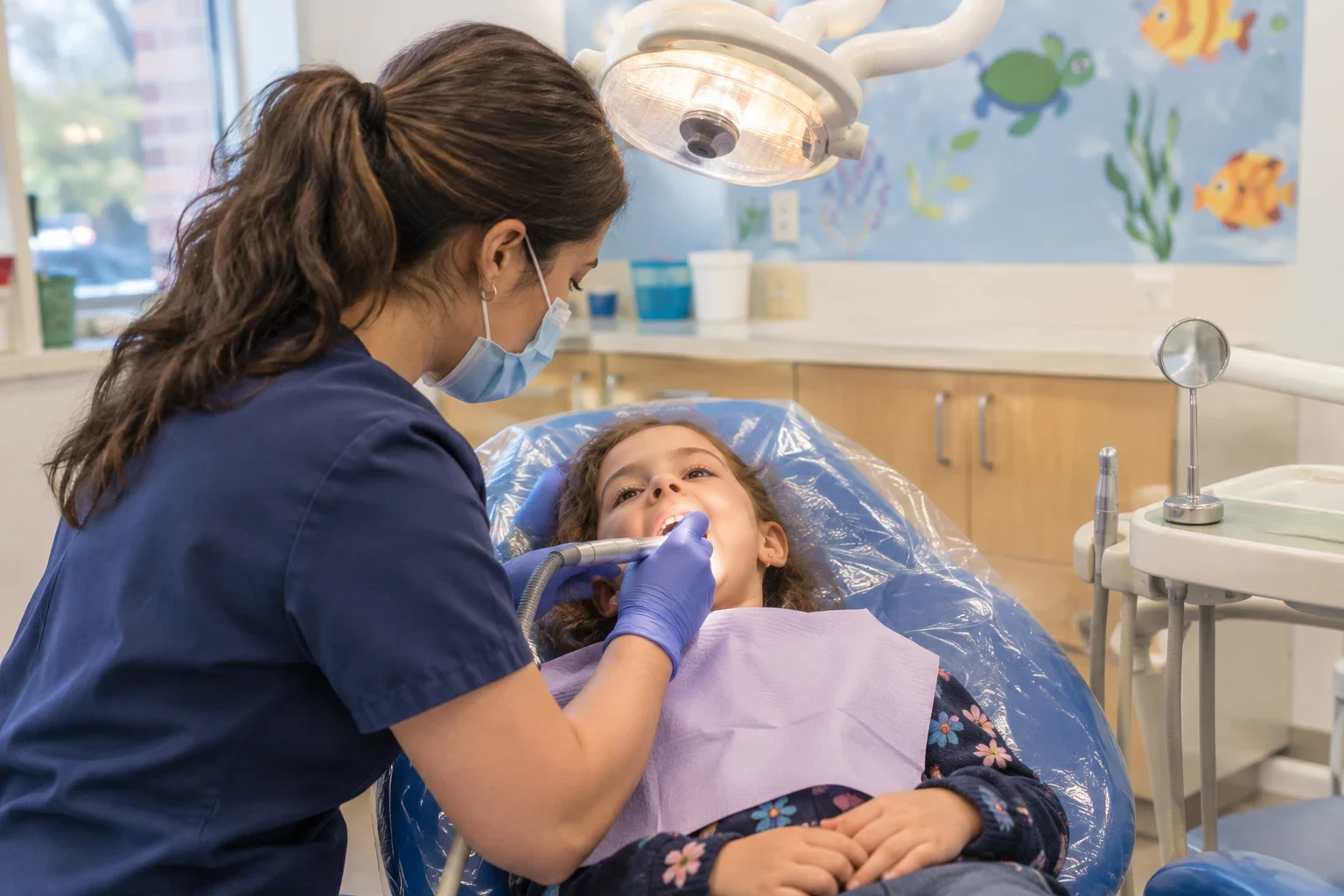
Exams & Cleanings
Regular checkups and gentle cleanings that find soft enamel and gum irritation early, while a small fix is still enough.
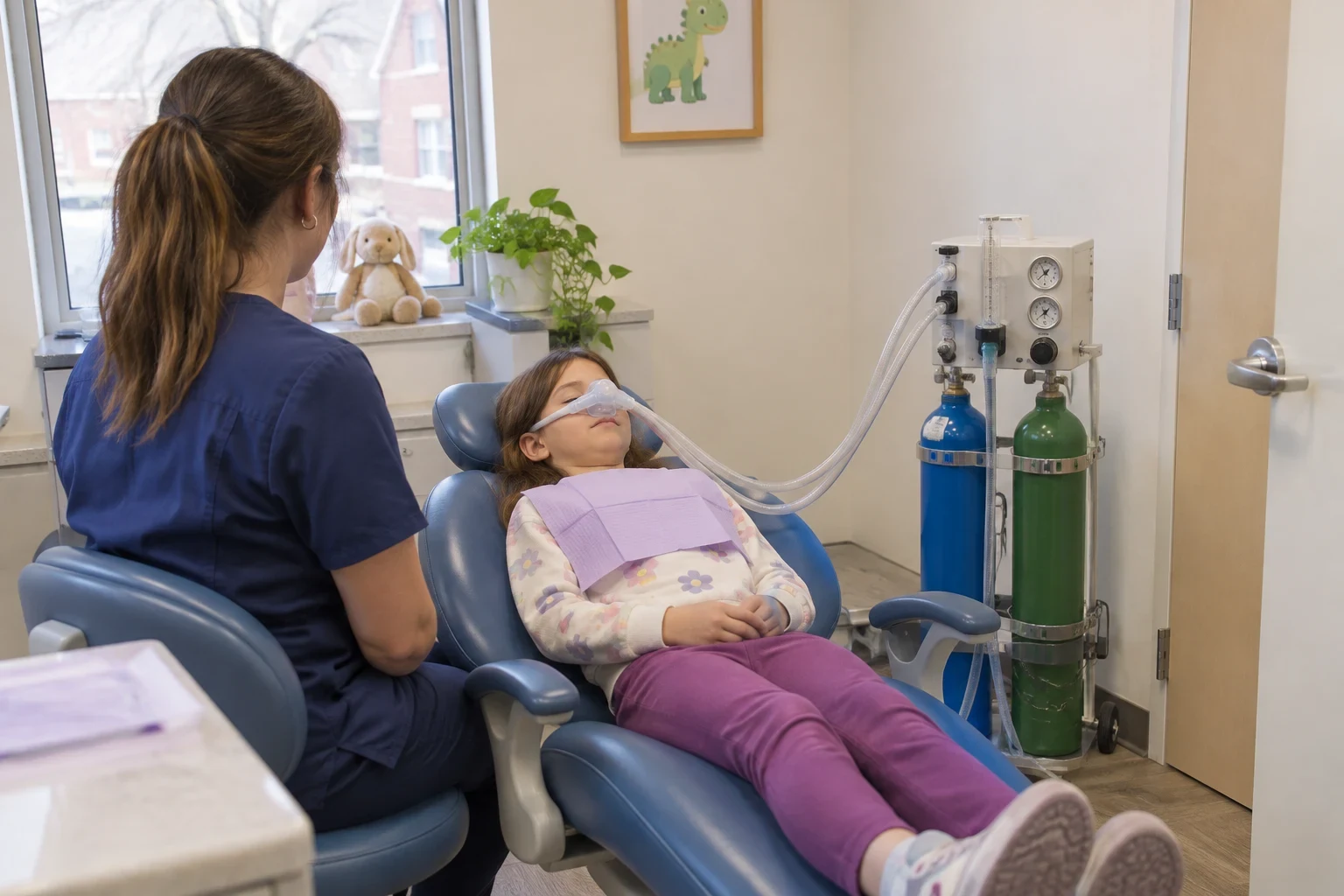
Sedation Dentistry
Calming options for kids who are anxious, very young or facing several treatments, so the needed work gets finished in fewer, calmer visits.
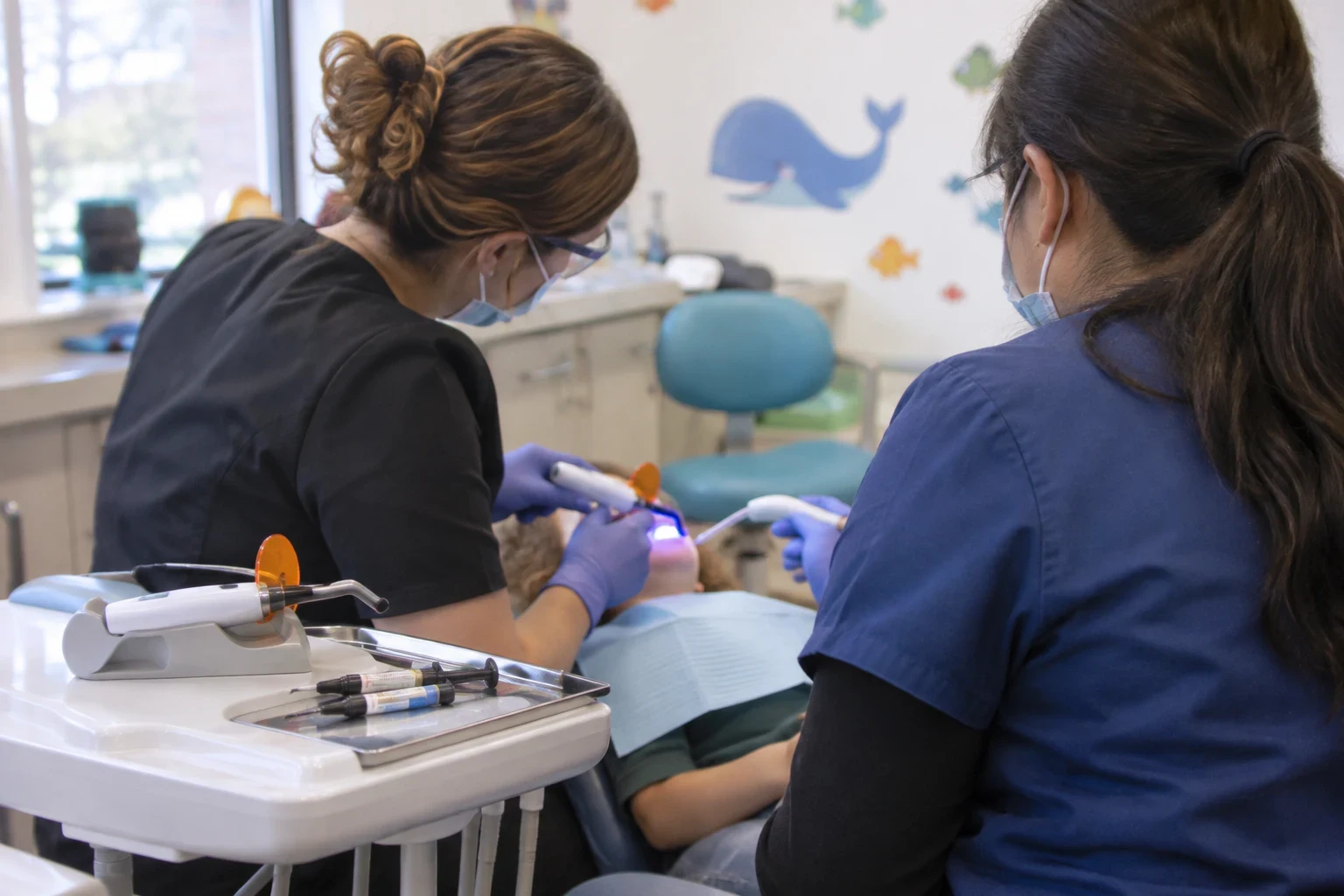
Fillings
Small cavities cleaned out and rebuilt with tooth-colored material, so baby molars and new adult teeth keep chewing comfortably until it is their time to change.
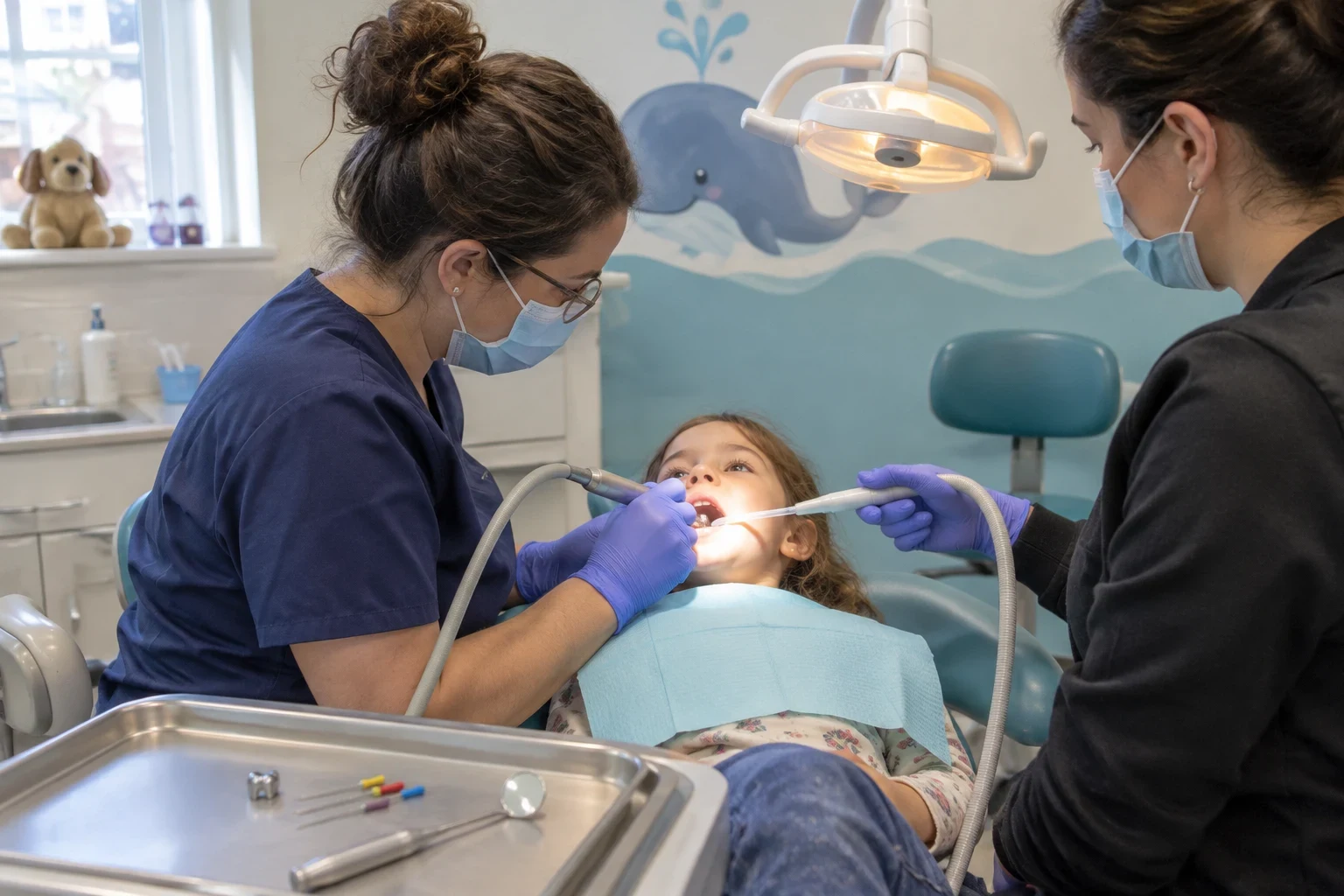
Root Canals
Pulp treatment for baby and permanent teeth that removes infected nerve tissue and keeps the tooth working, so your child avoids an extraction and a gap.
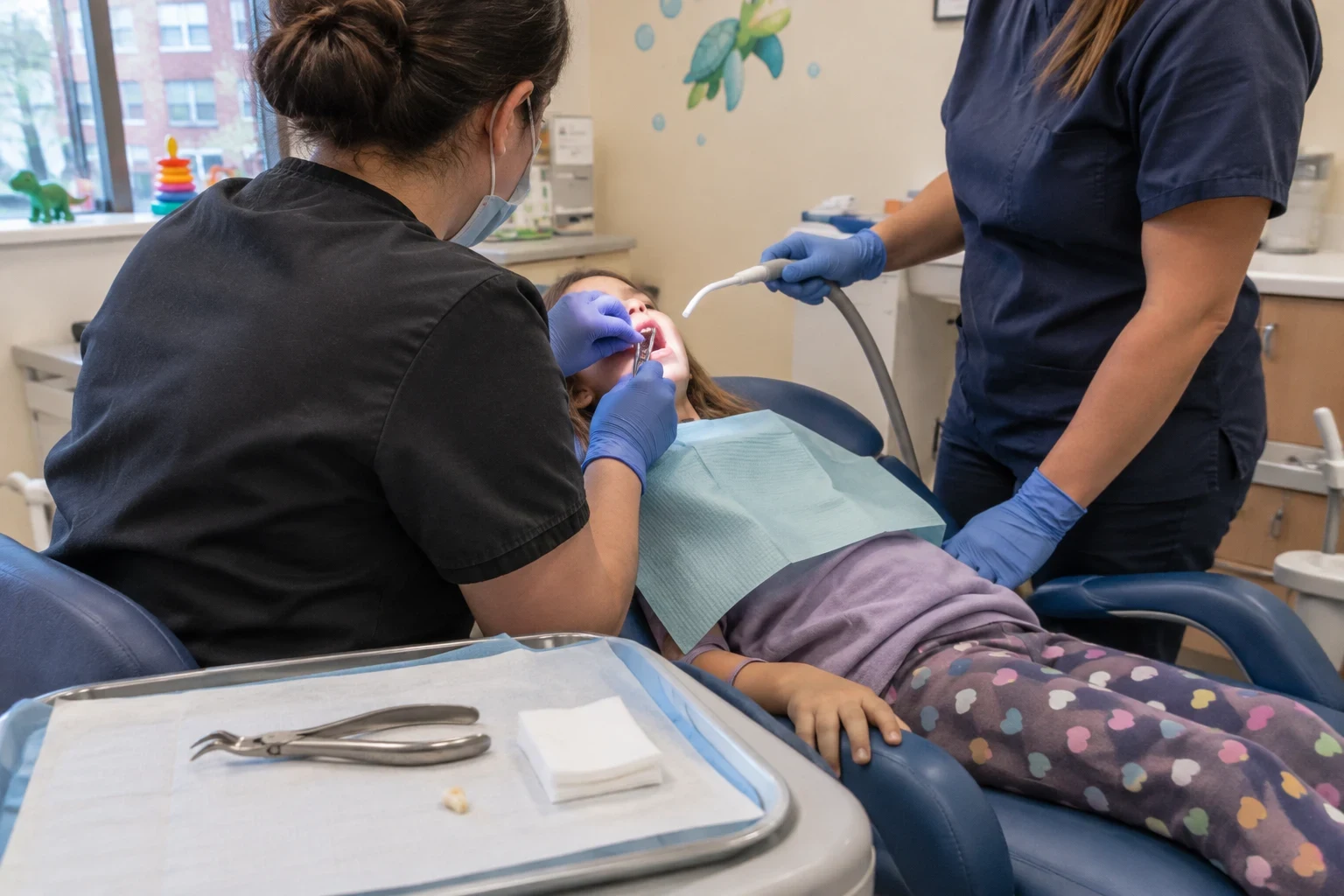
Extractions
When a tooth can't be saved or won't let go, we remove it gently and plan ahead so the teeth around it stay healthy and in position.
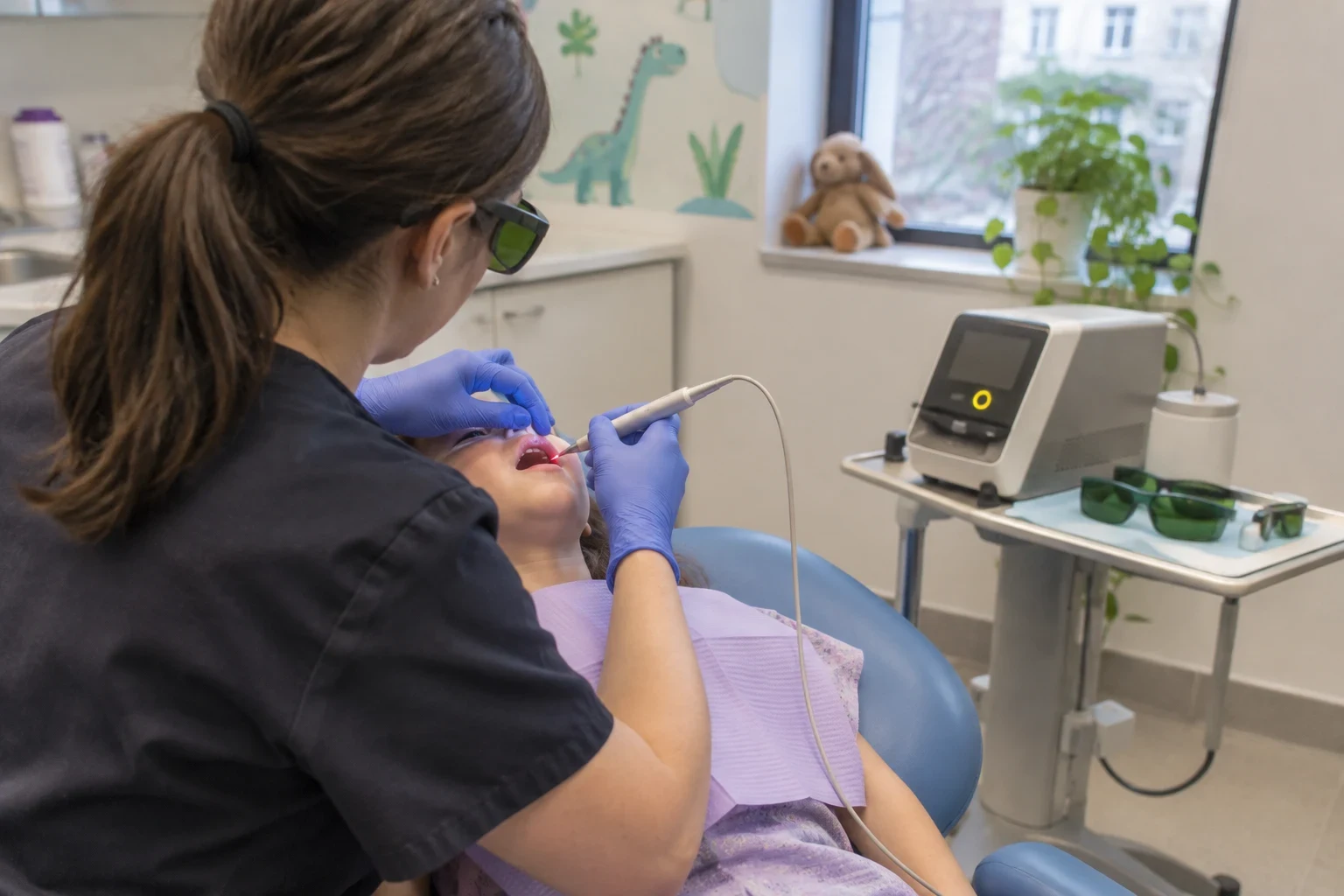
Frenectomies
Release of a tight tongue or lip attachment that limits feeding, speech or cleaning, with aftercare stretches that keep the result open.
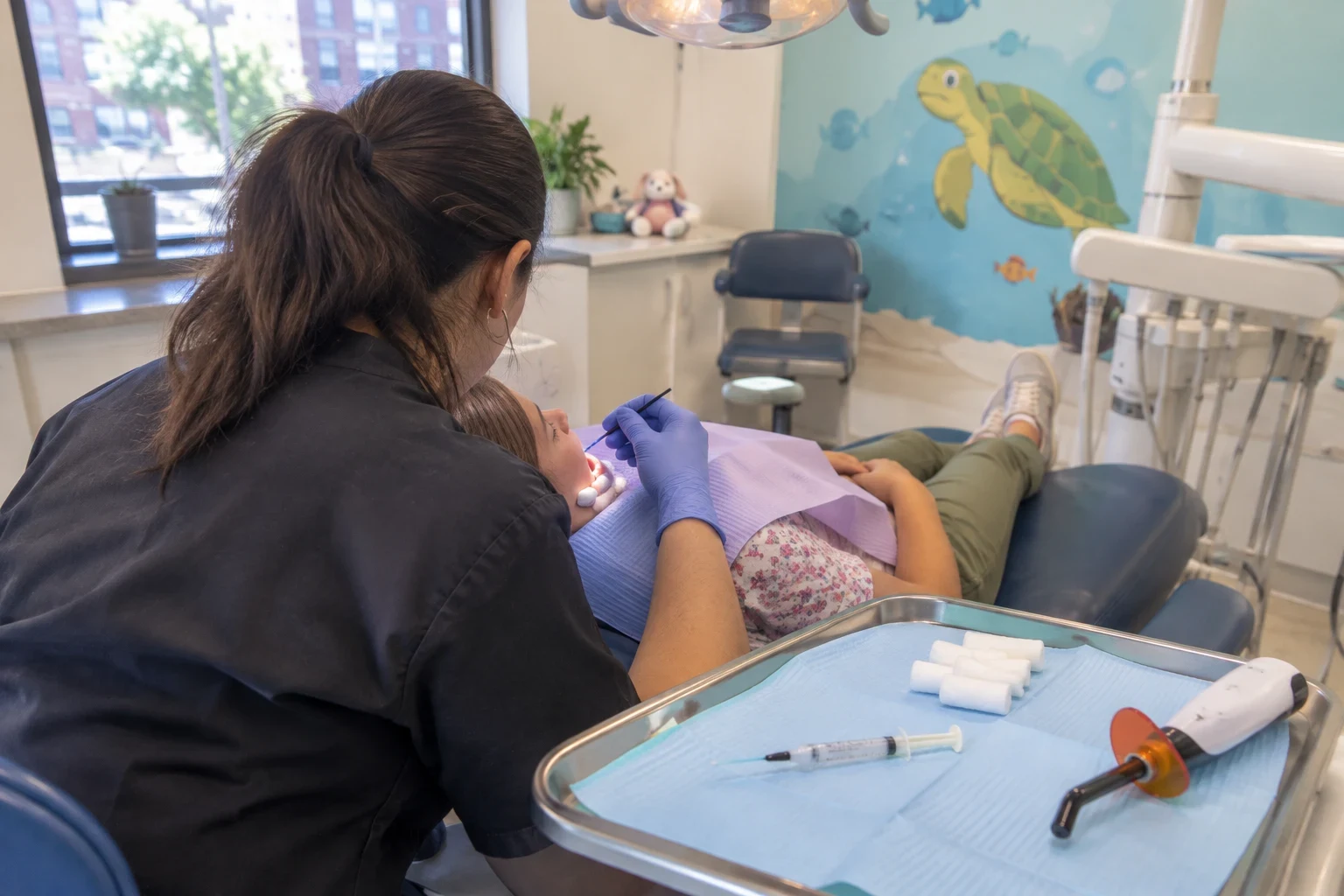
Sealants
A thin protective resin painted into the chewing grooves of back teeth, placed without shots or drilling and looked over at every checkup.
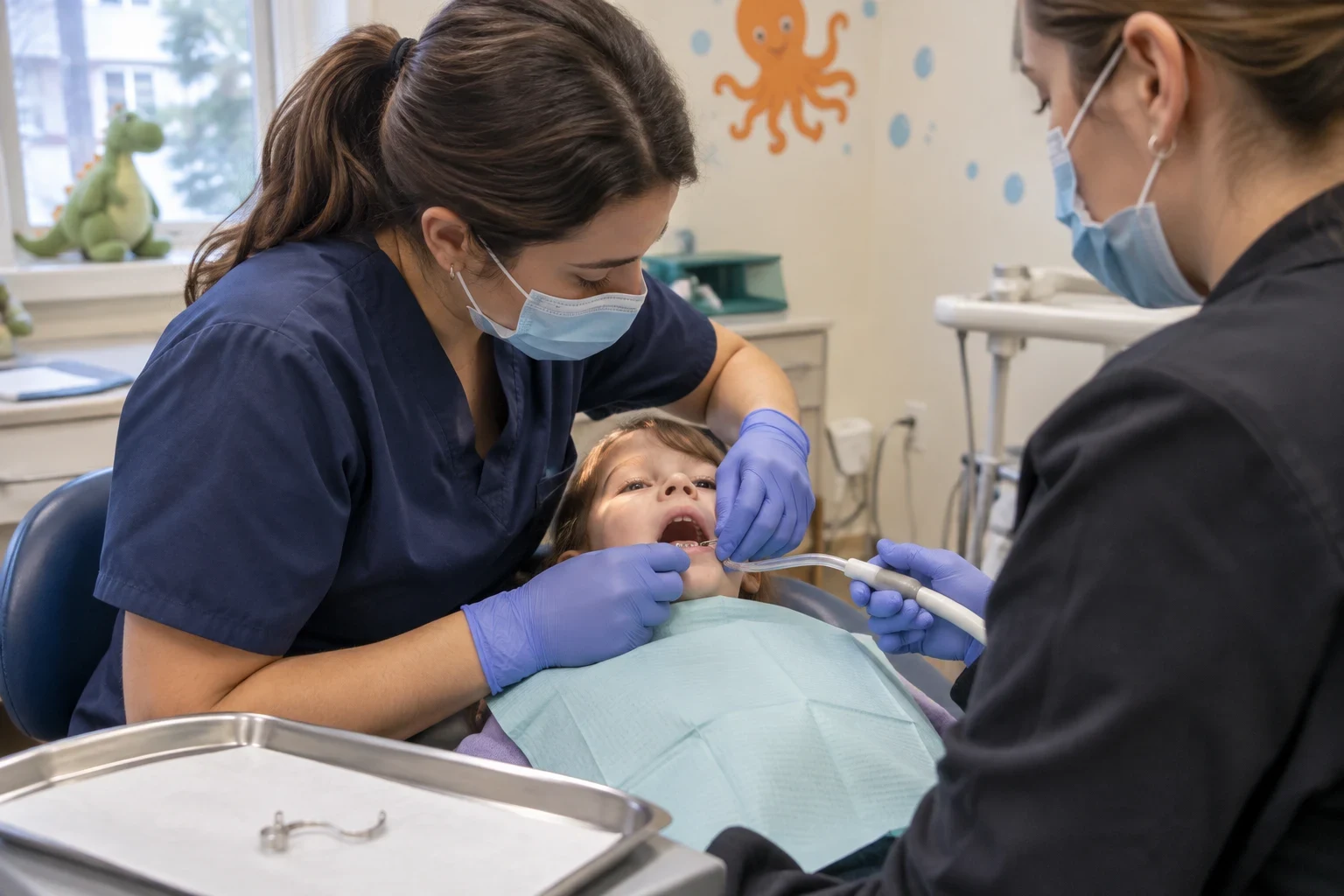
Space Maintainers
A small fixed or removable appliance that keeps the gap open after a baby molar comes out early, so the permanent tooth has room to erupt.
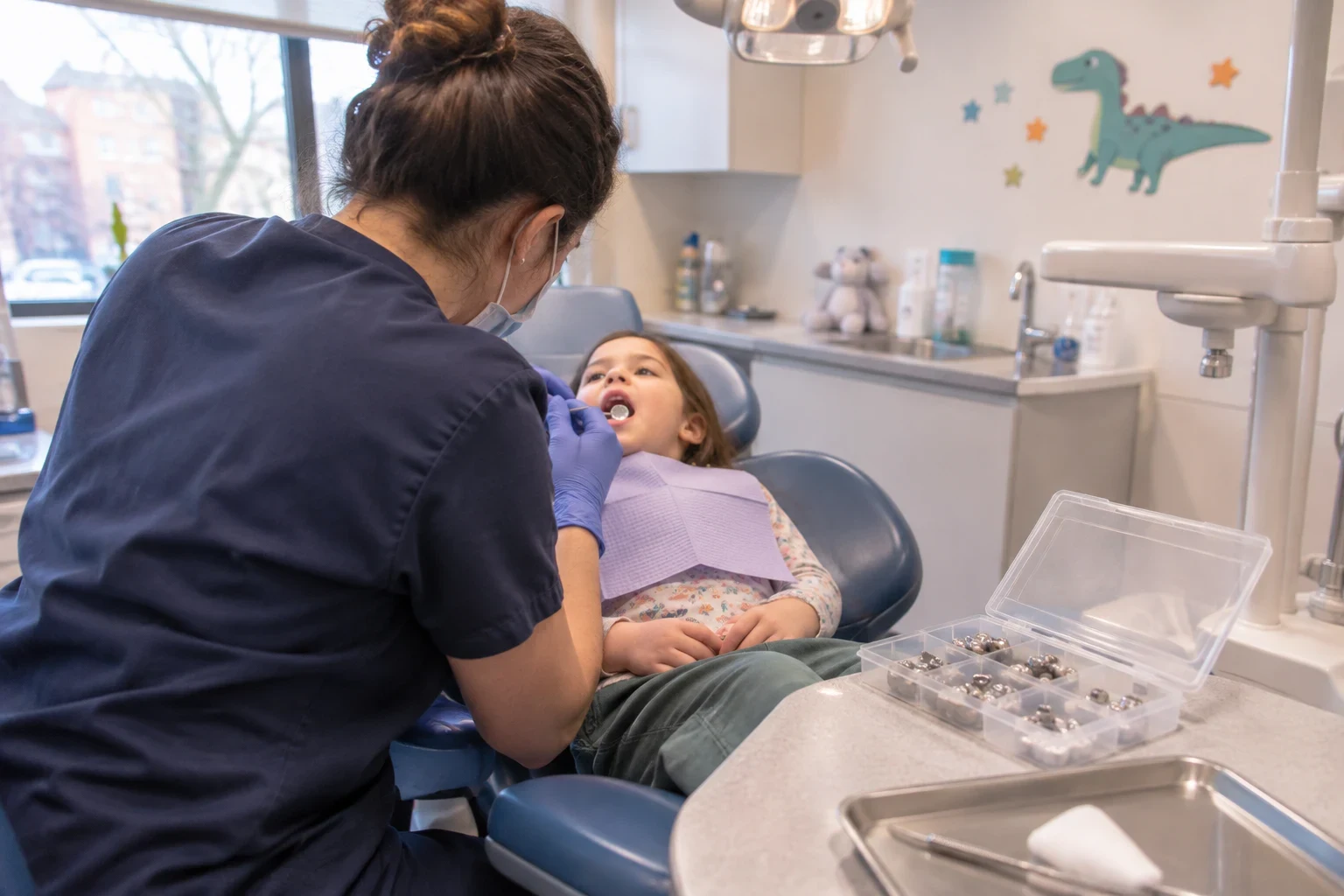
Pediatric Crowns
Stainless steel and tooth-colored crowns that cover badly decayed baby teeth and keep them working until the adult tooth is ready.
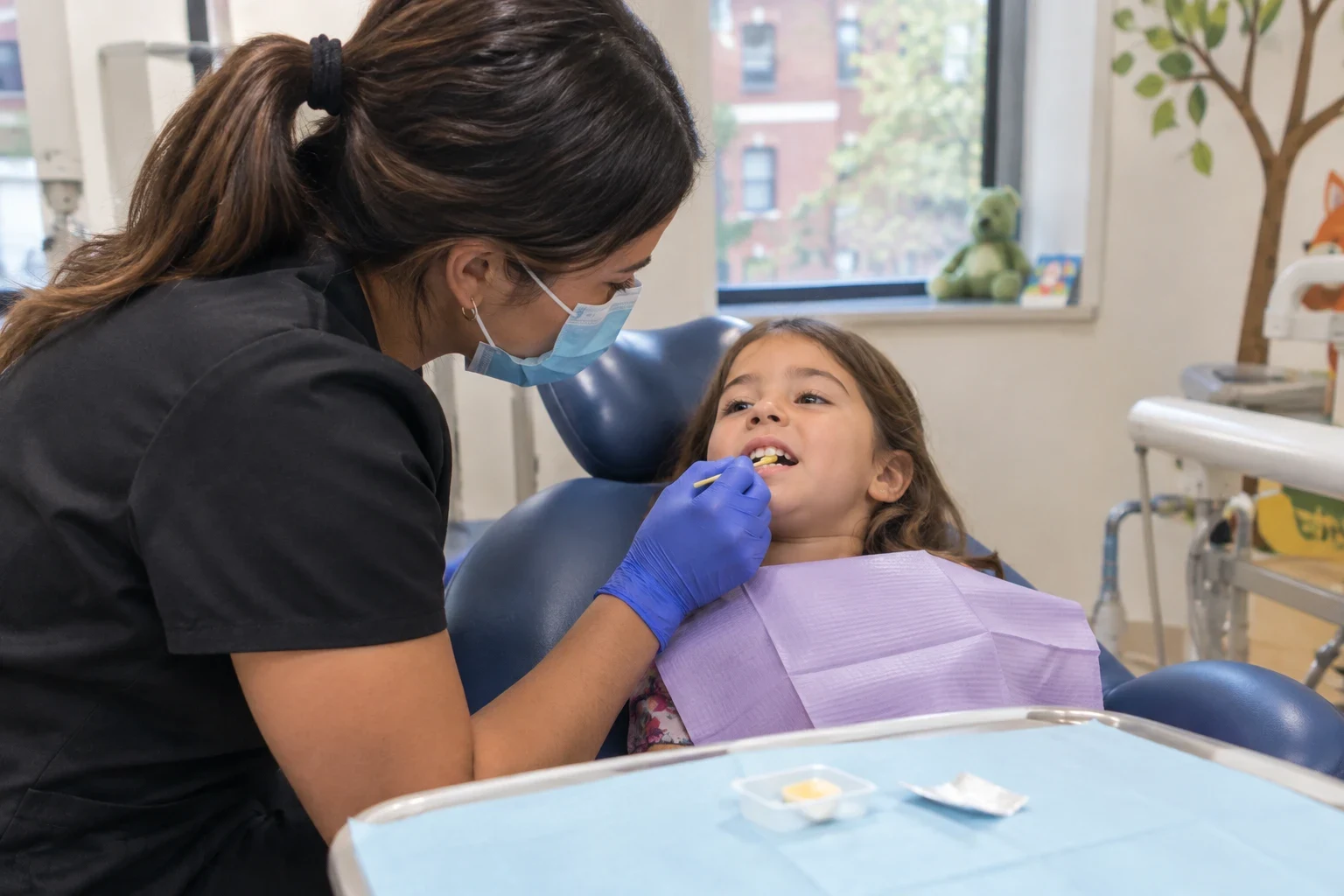
Fluoride Treatment
A thin fluoride varnish painted on at checkups that helps your child's enamel rebuild minerals and resist the acid that starts cavities.
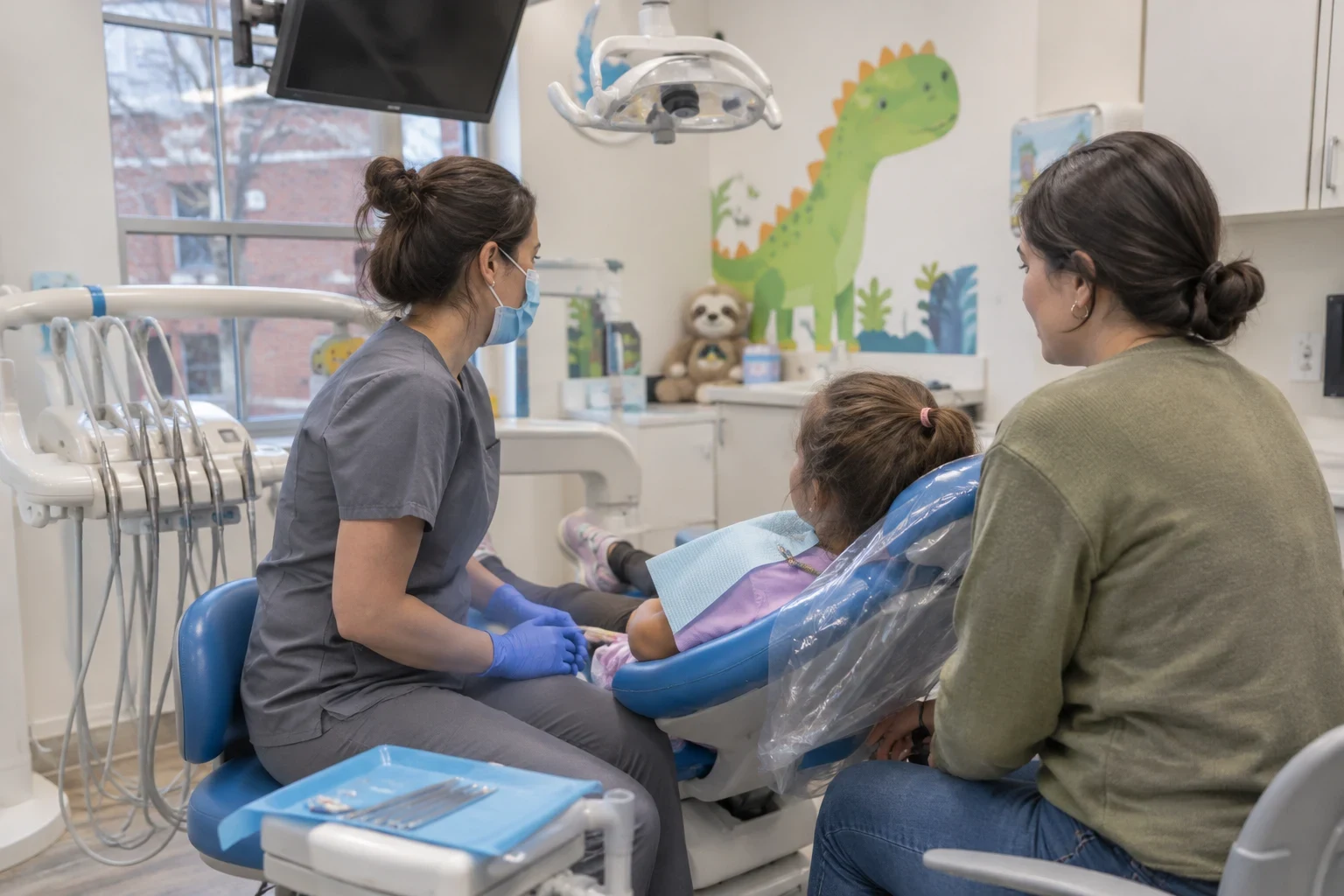
How We Look After Your Child's Teeth
A baby molar can stay in place until about age 12. We treat it like a part that has to last that long, and we plan care around that timeline.
- We watch small things early
- At each checkup we look for chalky white spots along the gumline, the first sign that acid is pulling minerals out of enamel. Caught at that stage, a spot can often be firmed up with fluoride varnish and better brushing instead of a drill.
- Treatment matched to the tooth's lifespan
- A molar that will fall out in a year gets a different plan than one that has to hold space for five more. We tell you which teeth we expect to last and why, so you are not paying to restore a tooth that is about to leave on its own.
- Written plans you can take home
- If your child needs more than a cleaning, you get a written plan listing each tooth, the treatment we suggest and the reason for it. You can read it, check it against your insurance and ask questions before anything is scheduled.
- Comfort built into the visit
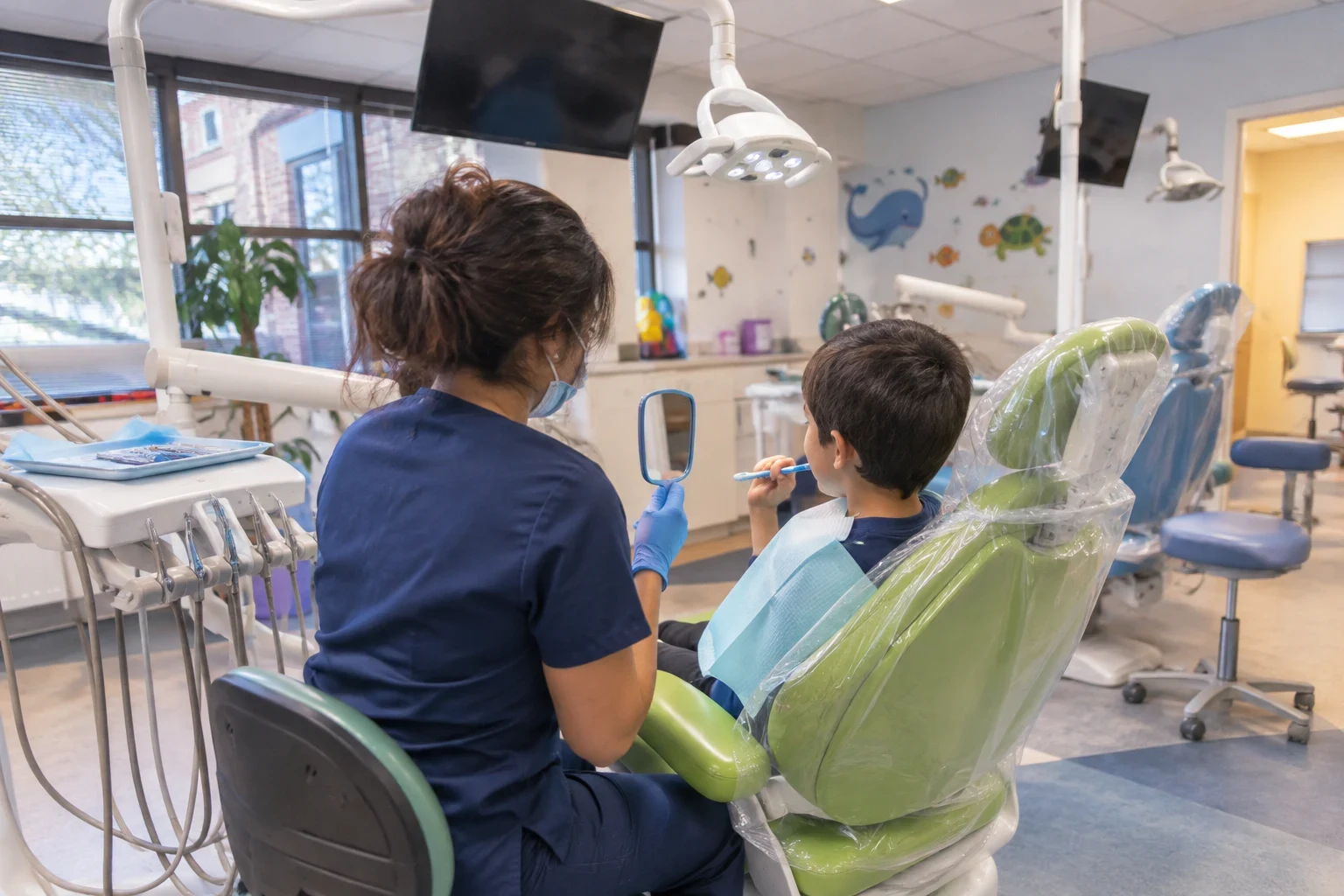
- We explain each tool to kids in words they understand and let them hold the mirror. For children who are very anxious or need longer work, sedation dentistry is an option we talk through with you in detail first.
A Children's Practice Focused on Prevention
We are a pediatric dental office in Somerville, MA, and our patients range from babies getting their first tooth to teens finishing their last molars. Children's teeth differ from adult teeth in ways that matter. Baby tooth enamel is thinner, so decay moves through it faster, and the pulp sits closer to the surface. That shapes how we clean, how often we check and how we restore.
Our approach is maintenance. A sealant placed on a six-year molar, a fluoride varnish every few months for a cavity-prone child, a filling done while it is still small: these keep teeth working for years and spare kids bigger treatment later. We explain the reason behind each recommendation so parents can make the call with the full picture.
Where Our Patients Come From
We see kids from every part of Somerville, along with plenty of families who make the short trip from Cambridge, Medford, Arlington and Malden. Others travel in from Boston, Brookline, Everett, Chelsea, Watertown and Melrose for checkups and treatment. If you have a quick question about a first visit or a new symptom, a phone or video conversation is often the easiest place to start.
- Somerville
- Cambridge
- Boston
- Malden
- Brookline
- Medford
- Everett
- Arlington
- Chelsea
- Watertown
- Melrose
If you are unsure whether our schedule fits your family's week, a short phone call lets us look at appointment times together.
What a Visit Looks Like
Each appointment follows the same steps, so kids know what comes next and parents know what they are agreeing to.
- 1
Your phone call
You call us, we set up new patient registration and an appointment, and we ask about your child's health history, any worries and your insurance. If something specific is bothering you, tell us then so we plan enough time.
- 2
The exam and cleaning
We count teeth, check how adult teeth are coming in, look at gums and bite, and clean away plaque and tartar. X-rays are taken only when your child's age and risk call for them.
- 3
A clear explanation
We sit down with you and go over what we found, tooth by tooth. If treatment is needed, you get a written plan and estimate to review.
- 4
Treatment and follow-up
Fillings, sealants or crowns are scheduled at a time that suits your family. We then book the next checkup, usually about six months out, so small changes get caught early.
Questions Parents Ask Us
- When should my child have a first visit?
- The usual guidance is by the first birthday, or within six months after the first tooth breaks through. That first appointment is brief. We look over the teeth and gums, check for early enamel changes and show you how to brush very small teeth. Coming in early lets kids get comfortable in the chair before any treatment is needed.
- Why fix a cavity in a baby tooth that will fall out?
- Many baby molars stay in the mouth until age 10 to 12. Left untreated, decay can reach the pulp and cause pain and infection, and an infection near the root can damage the permanent tooth developing below it. Each baby tooth also saves a gap for its replacement. When one is lost too soon, the teeth beside it can tip into the space and block the adult tooth from coming in where it should.
- How often does my child need a cleaning?
- For most kids, an exam and cleaning roughly every six months works well. Children who get cavities often, wear braces or have certain health needs may do better with shorter gaps between visits and extra fluoride. We set the interval based on what we find at each checkup.
- What do sealants do?
- A sealant is a thin resin coating brushed into the deep grooves on the chewing surfaces of back molars. Those grooves can be narrower than a single toothbrush bristle, so plaque settles in and stays. The sealant fills the grooves and leaves a smooth surface that is easy to clean. We check sealants at every visit and add material where they have worn.
- Is sedation safe for kids?
- We recommend sedation only when a child is very anxious, very young or needs a longer appointment. Beforehand, we go through your child's health history with you, explain the type we suggest and walk you through fasting and aftercare steps. Many kids need nothing more than nitrous oxide, which clears quickly once the visit ends.
- What payment options do you accept?
- We take Visa, MasterCard and Discover, work with most insurance plans and offer the CareCredit Patient Payment Plan for spreading out the cost. Have your insurance card handy when you phone, and we will check your coverage before the appointment.
- Can I talk with you before bringing my child in?
- Yes. A phone or video conversation is a good fit for questions such as what happens at a first visit or whether a sore spot should be seen soon. If a hands-on exam makes sense, we will set up a time for you at the office.
Keep Small Problems Small
Regular checkups catch enamel changes while they can still be reversed. Call to register your child as a new patient and pick a time that works for your family.