ServicesExtractions
Tooth Extractions for Kids in Somerville
We remove a child's tooth only when keeping it would cause more harm than taking it out. Before we start, we take x-rays and explain why. Afterward, we plan for the space it leaves, so the rest of your child's smile keeps developing on track.
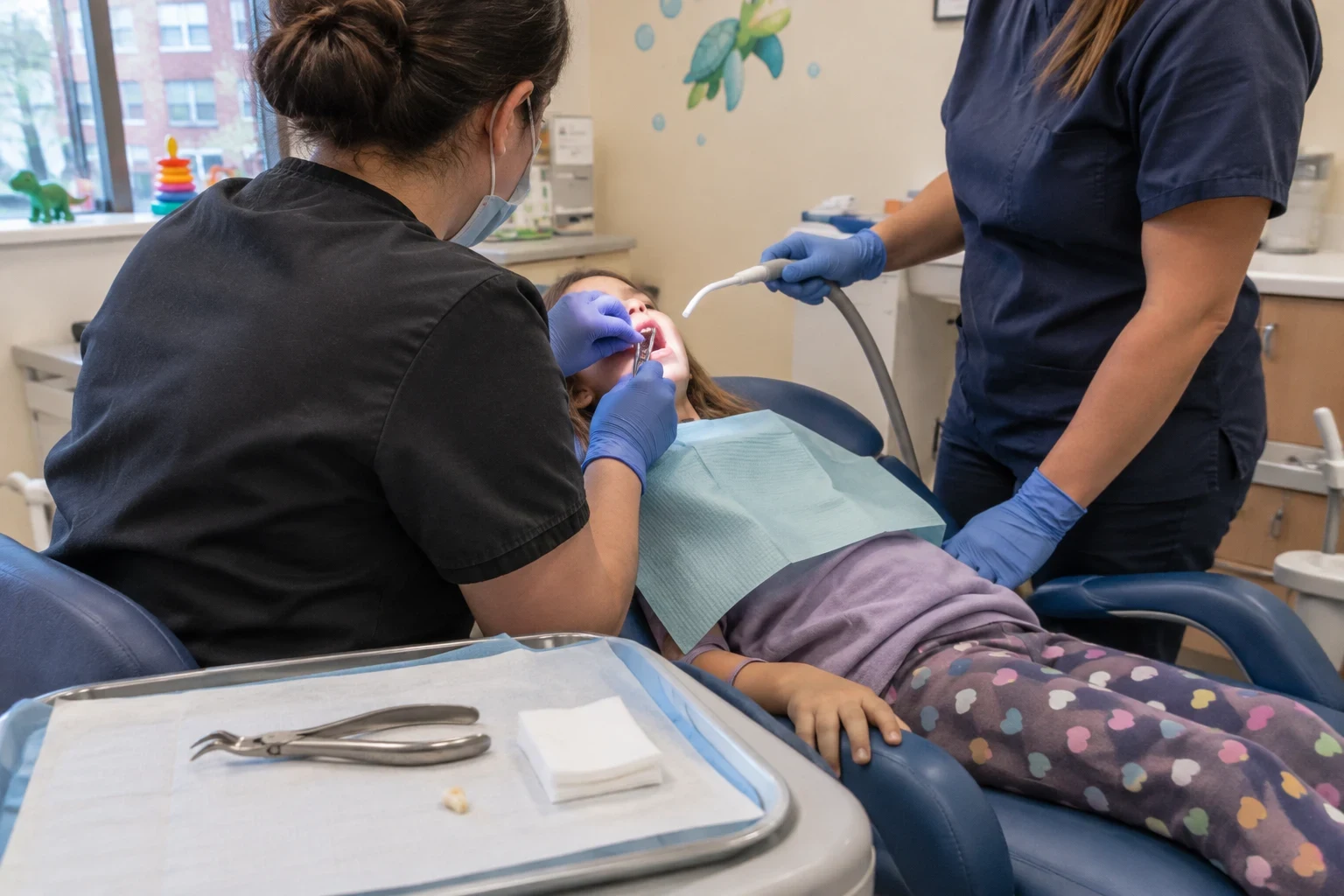
When Removing a Tooth Is the Right Call
Most of what we do is aimed at keeping teeth where they are. Baby teeth save space for the permanent teeth forming beneath them, and they matter for eating and for clear speech while the jaw is still growing. That's why we never lead with an extraction. When decay has reached the pulp, a filling, a pulpotomy or a pediatric crown can often keep the tooth in service.
Some teeth are past saving. Decay may have eaten away too much of the crown to support a restoration. An infection may have moved beyond the root tip into the bone, where it can put the developing permanent tooth at risk. In other cases the tooth is healthy but blocking the way, such as a baby tooth whose roots never dissolved and now stands in front of an adult tooth trying to erupt. Here, a clean, careful extraction protects everything around it.
What Your Child's Extraction Includes
- X-rays before any decision
- A periapical or panoramic x-ray shows root length, how far the root has resorbed and where the permanent tooth sits. That image tells us whether removal will be straightforward and whether it's needed at all.
- Two-step numbing
- We start with a topical gel on the gum. Then we deliver the local anesthetic slowly so the pinch stays small. We test the area before beginning and add more if your child feels pressure that bothers them.
- Careful removal
- Baby teeth have thin roots that can break. We use small elevators to loosen the ligament around the tooth before lifting it out, which spares the bone and the adult tooth bud below.
- Clot protection and aftercare
- Your child bites on gauze until bleeding slows and a clot forms. You go home with written instructions on food, rinsing and pain relief for the next few days.
- A plan for the gap
- If a back baby tooth comes out years ahead of the premolar beneath it, the neighboring teeth can lean and drift into the empty spot. We'll tell you whether a space maintainer is worth placing to keep that room open.
Signs a Tooth May Need to Come Out
A gum boil near one tooth
A small pimple on the gum that drains and comes back usually means an abscess at the root. If the tooth is too damaged to treat, removing it stops the infection at its source.
Two rows of front teeth
Lower adult incisors often erupt behind baby teeth that haven't loosened. If the baby tooth is still firm a few weeks later, it usually needs help coming out.
A tooth that sits lower than its neighbors
A baby molar that looks sunken may be fused to the bone, a condition called ankylosis. These teeth don't fall out on their own and can trap the premolar below.
Swelling in the cheek or jaw
Facial swelling, fever or a bad taste that won't go away point to an infection that needs prompt attention. Phone us to get your child seen.
A cracked tooth after a fall
When a crack runs below the gumline or splits the root, the tooth often can't be restored and will stay sore until it's removed.
How the Appointment Goes
- 1
Exam and a plain explanation
We examine the tooth, go over the x-rays and show you what we found. If a filling, crown or root canal treatment could still save it, you'll hear that first.
- 2
Getting your child comfortable
We describe each step to your child in simple, honest words. For anxious kids or more involved cases, we may recommend one of the options on our sedation dentistry page.
- 3
Numbing and removal
Once the area is fully numb, we loosen the tooth and lift it out. A baby tooth with resorbed roots often takes just a minute or two. A fused or broken tooth needs more time.
- 4
Gauze, then going home
Your child bites on gauze for about 20 to 30 minutes while the clot sets. Expect the numbness to linger for several hours after you leave. Children often gnaw on a numb lip or cheek without realizing it, so watch them closely until normal feeling comes back.
- 5
Healing check
The gum typically closes over in one to two weeks. If a space maintainer is planned, we book the fitting so the space is held before the neighboring teeth begin to move.
What Moves the Price of Removing a Tooth
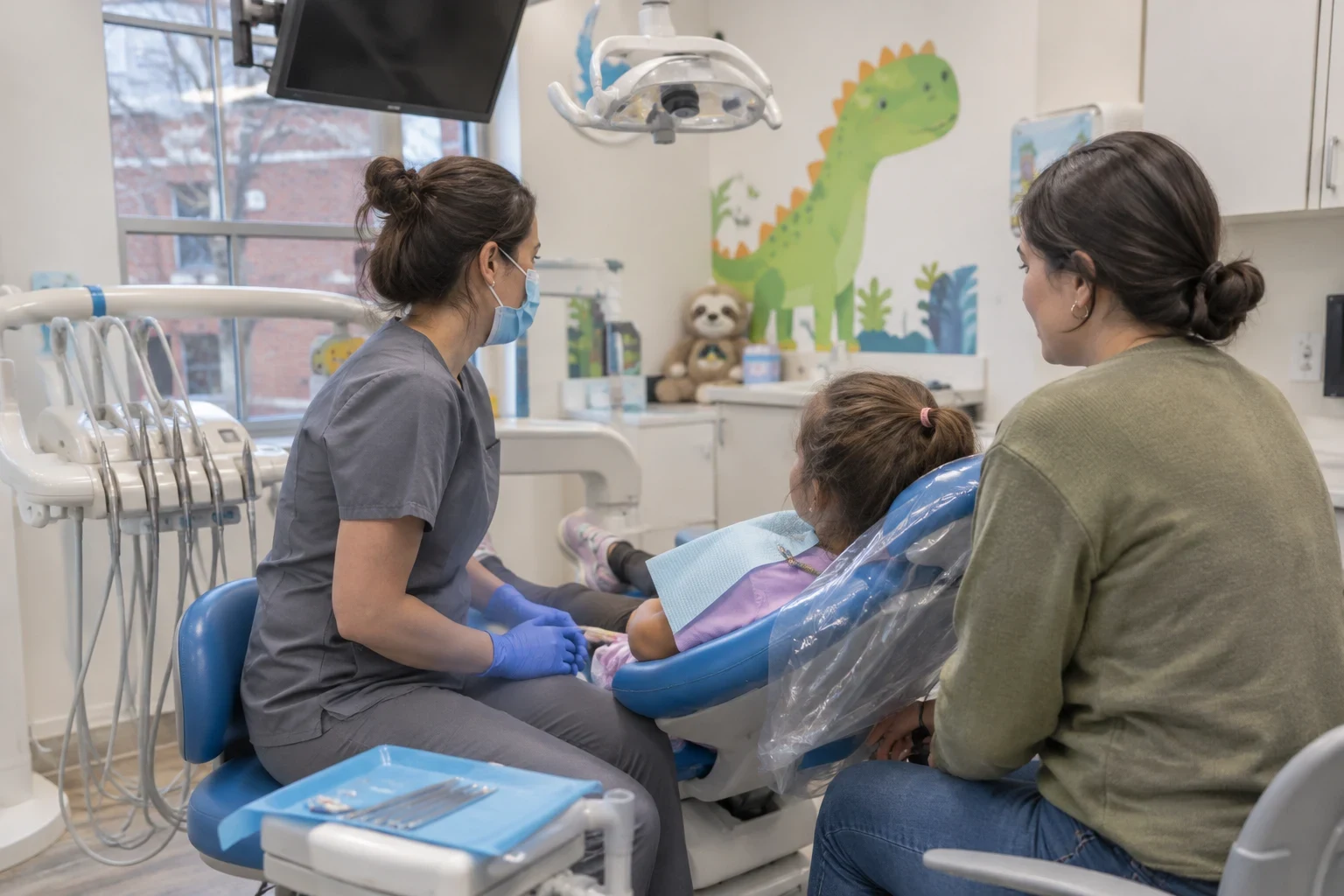
No two extractions are priced alike, because the cost follows the tooth itself and whatever is anchoring it. We settle the number once the exam and x-rays are done. You'll know the plan and the reason behind it before any work begins. We accept MasterCard, Visa, Discover, most insurance plans and the CareCredit Patient Payment Plan.
- Simple or surgical
- A wobbly baby tooth with mostly dissolved roots lifts out quickly. A tooth fused to the bone, broken off at the gumline or held by long, curved roots may need a surgical approach and more chair time.
- Number of teeth
- Removing two or more teeth in one visit, common when an orthodontist asks for it, changes both the length of the appointment and the amount of anesthetic used.
- Sedation
- Nitrous oxide or a deeper level of sedation adds to the total. We recommend it only when it will truly help your child get through the visit calmly.
- Holding the space afterward
- If a back baby tooth comes out early, the space maintainer is a separate charge. It usually runs far less than correcting crowded permanent teeth years later.
- Your insurance benefits
- Coverage for x-rays, extractions and sedation varies from plan to plan. We'll walk through your benefits with you before treatment starts.
Questions Parents Ask About Extractions
Something not covered here? (617) 668-1163
Will my child feel the tooth being pulled?
They shouldn't feel pain. Once the anesthetic works, most kids notice only pressure and some pushing. We confirm the area is numb before we begin and stop if your child signals they're uncomfortable.
Why not just wait for the baby tooth to fall out?
If the tooth is loosening the normal way, waiting is usually the better choice. An infected tooth, though, can harm the adult tooth forming underneath it. A fused tooth, or one whose roots aren't dissolving, may never come out by itself. The x-ray tells us which case applies to your child.
What can my child eat afterward?
For the rest of that day, stick with things that need little chewing and aren't hot, like mashed potatoes, smoothies eaten with a spoon or scrambled eggs. Wait until feeling returns before offering any food, so your child doesn't chomp on a numb cheek. Skip straws and forceful spitting until the following day, because that suction can dislodge the clot.
How much bleeding is normal?
A little pink in the saliva is expected on the first day. If the socket keeps oozing, fold a fresh piece of gauze and have your child bite down firmly for another 20 minutes. If that doesn't slow it, phone us.
Will my child need a space maintainer after the tooth comes out?
Not always. Losing a front baby tooth seldom calls for one, and neither does losing a molar shortly before the permanent tooth is due. The usual case is a back molar lost well ahead of schedule, where holding the room open heads off crowding. Our space maintainers page covers this in more detail.
Find Out Whether the Tooth Can Stay
Schedule an exam and x-rays for your child. We'll tell you if the tooth can be saved, what taking it out would involve if it can't, and how we'll keep the space open while the adult tooth develops. If you're new to our office, we can get your child registered during that phone call too.