ServicesRoot Canals
Root Canals for Kids in Somerville
Once a cavity or a knock to the mouth damages the soft tissue at the center of a tooth, pulling it is not the only option. We clean out the inflamed tissue, medicate what remains and seal it, so the tooth keeps chewing and guarding space for the adult tooth.
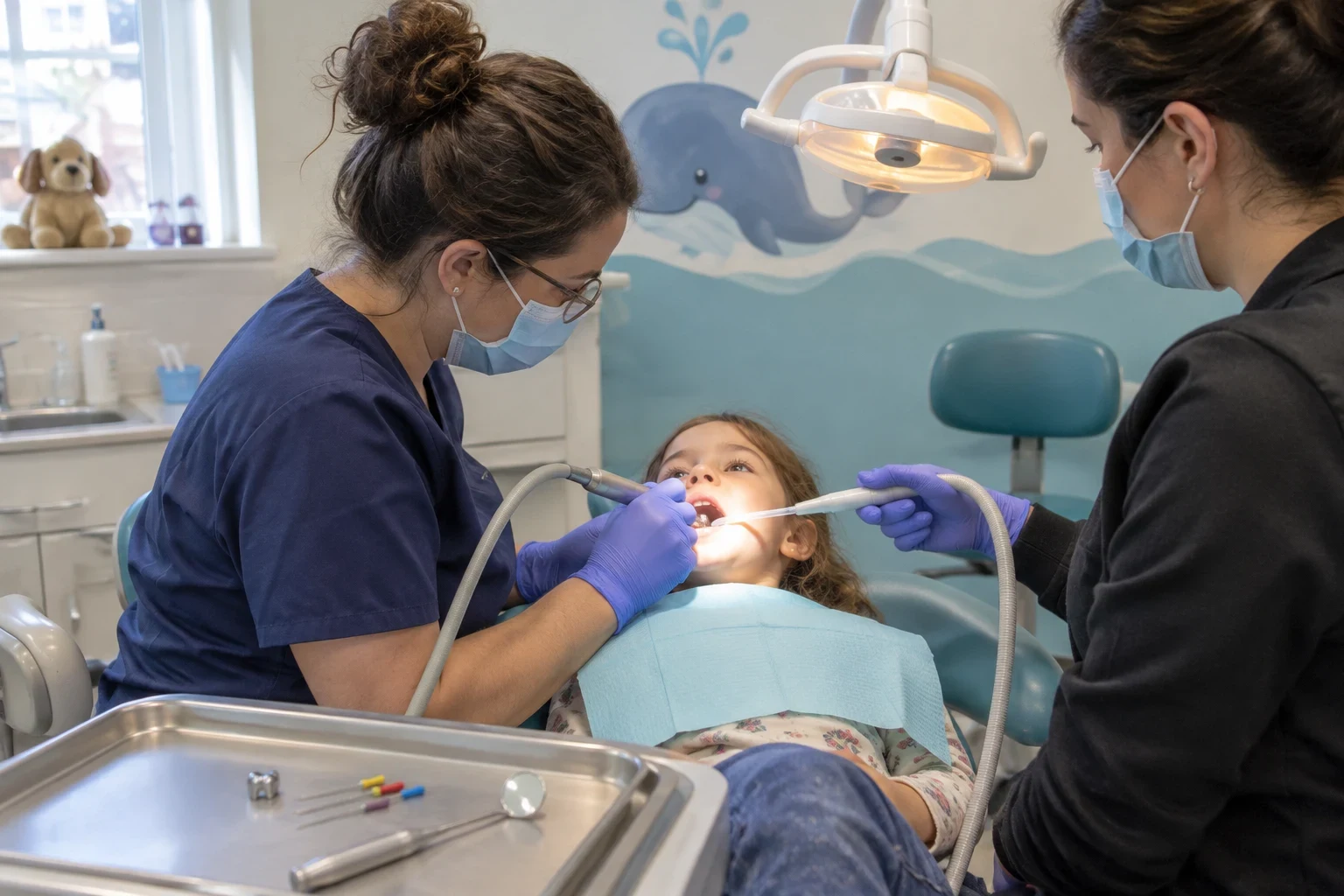
Saving the tooth your child already has
The pulp is the soft center of a tooth, made of nerve and blood vessels. When a cavity works through the enamel and dentin, bacteria get into that center and it becomes inflamed or infected. At that point a filling cannot solve it, because the trouble has moved inside the tooth.
For children, root canal treatment usually takes one of two forms. With a pulpotomy, we clear out the diseased tissue in the upper chamber of a baby tooth and leave the healthy tissue in the roots alone. With a pulpectomy, we clean the roots as well and fill them with a material that dissolves as the permanent tooth moves up. Teens whose permanent teeth have finished forming may need a conventional root canal.
Why save a tooth that will eventually fall out? A baby molar often stays until age 10 to 12. During those years it steers the adult tooth into place and stops neighboring teeth from drifting. Keeping it healthy until it leaves on schedule is almost always simpler than dealing with an early gap.
What the treatment includes
X-rays and a pulp diagnosis
A small x-ray shows how far the decay has traveled and whether the bone around the root tips looks infected. From that image we decide between a pulpotomy, a pulpectomy or an extraction.
Careful numbing
A flavored gel numbs the gum surface first. The local anesthetic then goes in slowly, so your child notices pressure instead of a sharp pinch.
Rubber dam isolation
We fit a thin rubber sheet around the tooth. It keeps saliva and bacteria away from the opened tooth and keeps water and debris out of your child's throat.
Pulp removal and medicated dressing
After the decay is cleared, we take out the diseased pulp and place a medicated material that lets the remaining tissue heal. When the roots are treated too, we pack them with a paste that the body absorbs as the adult tooth erupts.
A protective crown
Treatment leaves a baby molar hollow, and chewing force can split it, so most of these teeth get a crown afterward. Our pediatric crowns page explains the options.
Follow-up at regular checkups
During routine exams and cleanings we take periodic x-rays of the treated tooth to confirm the bone around the roots stays healthy.
Signs the nerve of a tooth may be involved
Pain that lingers after cold or sweets
A quick twinge that fades is common with a small cavity. Pain that keeps going for a minute or more after ice cream or juice suggests the pulp is inflamed.
Toothache that wakes your child up
Pain that starts on its own, especially at night when lying down, often means pressure is building inside the tooth.
A pimple-like bump on the gums
A small bump near a tooth, sometimes draining, is usually a fistula. It is a sign of infection at the root tip even if your child says nothing hurts.
A tooth turning gray after a fall
A bump to a front tooth can damage the blood supply to the pulp. A gray or dark color showing weeks or months later is worth an x-ray.
Swelling in the cheek or gums
Puffiness near a tooth means infection has spread past the root. Tell us about any swelling when you phone so we can schedule your child promptly.
How the appointment goes
- 1
Talk and check
We look at the tooth, review the x-ray with you and explain which treatment fits and why. Your child gets a short tour of the tools in kid-friendly words.
- 2
Numbing and comfort
After the gel and anesthetic take effect, we place the rubber dam. If your child is very anxious or has several teeth to treat, we may talk with you about sedation dentistry options first.
- 3
Treating the pulp
We remove the decay and infected pulp, place the medicated dressing or canal paste and seal the tooth. Most pulpotomies on a single tooth take well under an hour, crown included.
- 4
Going home
Lips and cheeks stay numb for a few hours, so we ask parents to watch for chewing on them. Soft foods and children's pain relievers usually handle any soreness that evening.
What affects the cost
The total comes down to how much of the pulp has to be treated and what restoration protects the tooth afterward. Before any work starts, we walk you through the plan and the expected costs. You can pay with a Visa, MasterCard or Discover card. We also work with most insurance plans, and CareCredit's Patient Payment Plan is available if you would rather spread the cost out.
- Pulpotomy, pulpectomy or full root canal
- Treating only the chamber in the crown is a shorter procedure than cleaning out every root. A fully formed permanent molar in a teen takes the most chair time.
- Which tooth
- A molar has several canals where a front tooth usually has one, so there is more to clean and fill.
- The crown or final restoration
- A treated baby molar usually needs a crown, while a front tooth can often be closed with a filling. Whichever fits becomes part of the total.
- Sedation
- When nitrous oxide or deeper sedation is needed to keep your child comfortable, it adds to the cost of the visit.
Questions parents ask about kids' root canals
Something not covered here? (617) 668-1163
Why not just pull the baby tooth?
A baby molar holds the space for the adult tooth that replaces it, sometimes for years. If it comes out early, nearby teeth can tip into the gap and block the adult tooth. Saving it usually avoids the need for a space maintainer later. When a tooth is too damaged to save, we will tell you and talk about extractions instead.
Will it hurt?
With the tooth fully numb, most kids feel pressure and vibration, not pain. Many feel better afterward because the inflamed nerve causing the toothache is gone. Mild gum soreness for a day or two is normal.
Is a pulpotomy the same as a root canal?
They are related. A pulpotomy removes only the pulp in the crown of the tooth, while a root canal or pulpectomy cleans the pulp out of the roots too. Baby teeth often need only a pulpotomy because the root tissue is still healthy.
How long will the treated tooth last?
The goal is for a treated baby tooth to stay until it loosens and falls out on its normal schedule. Keeping it there depends on the crown staying intact and on regular checkups, brushing and fluoride treatment to protect the teeth around it.
Can my child go back to school the same day?
Usually yes, once the numbness wears off enough that they will not bite their lip or cheek. Children who had sedation should rest for the remainder of the day.
Get your child's tooth checked
If your child has a lingering toothache, a gum bump or a darkening tooth, we can take an x-ray and tell you exactly what the nerve needs. New patients can register over the same phone call.