ServicesFillings
Children's Fillings in Somerville
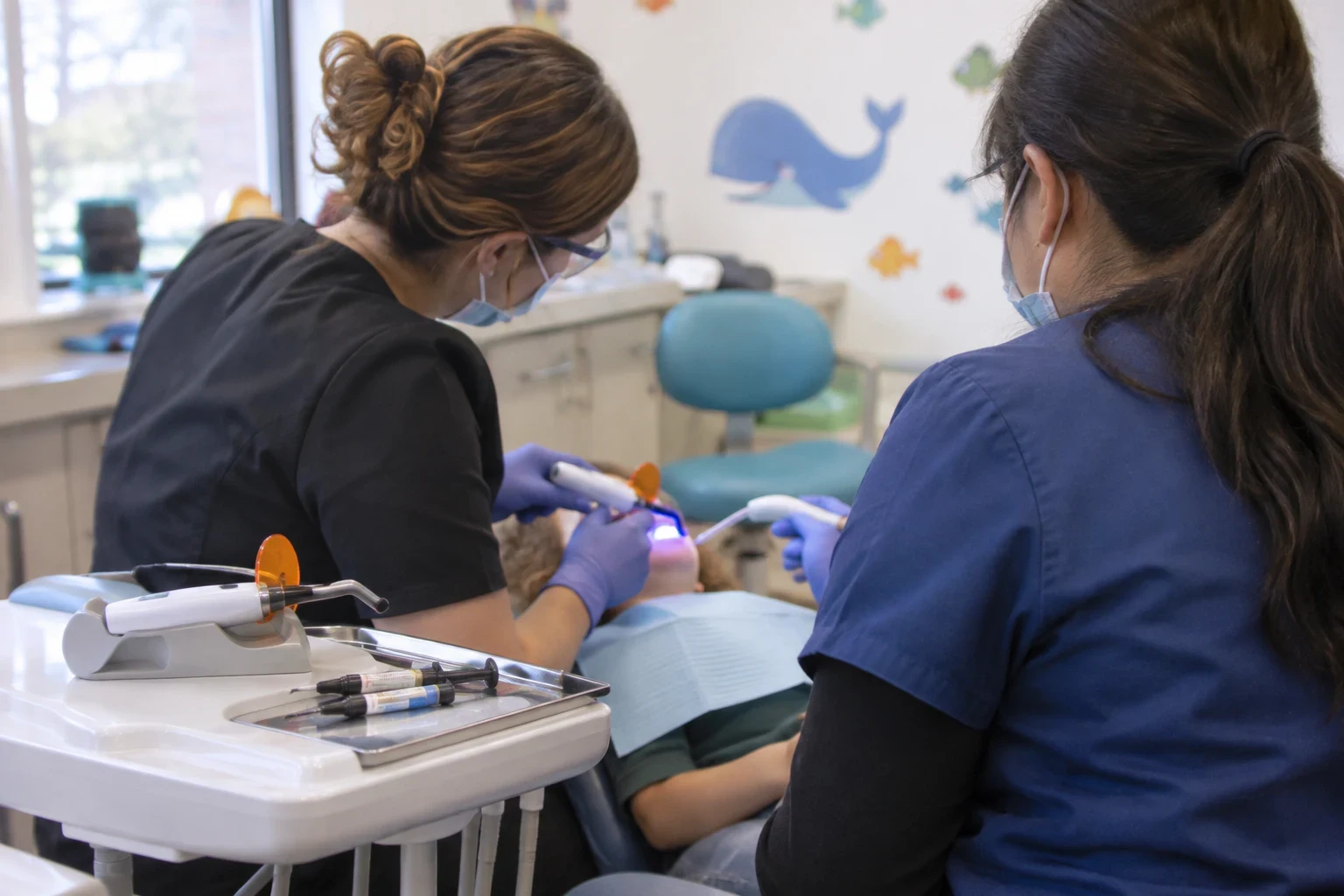
We remove the decay, seal the tooth with tooth-colored material and check the bite so your child can chew comfortably again. Treating a cavity while it is small keeps the tooth healthy for the years it still has to work, and it keeps the visit short.
What a Filling Does for a Growing Mouth
Bacteria that live on the teeth feed on sugars and starches and give off acid as a byproduct. Over weeks and months, that acid draws minerals out of the enamel until a weak spot gives way and decay reaches the softer dentin underneath. Once the surface has opened up, the tooth cannot rebuild itself. A filling removes the softened structure, closes the opening and restores the chewing surface so the tooth can do its job again.
Enamel on baby teeth is roughly half as thick as adult enamel, so decay reaches the dentin, and then the nerve, far sooner. This matters because the primary molars in the back often stay in place until a child is between 10 and 12, holding room for the adult teeth forming beneath them. Treating a small cavity now protects a tooth your child will rely on for years.
We treat each filling as one piece of a longer plan for your child's teeth. That plan accounts for how many years the tooth has left, your child's brushing and snacking habits, and the upkeep that keeps existing fillings from breaking down.
What Your Child's Filling Includes
X-rays and a close exam
Bitewing X-rays reveal decay between the back teeth, where it stays hidden from view. We pull up the image and show you the dark shadow in the enamel so you know exactly what we are treating.
Tooth-colored composite resin
Composite is a resin packed with fine glass particles that adheres directly to enamel and dentin. Because it grips the tooth, we only remove decayed structure and leave healthy tooth alone. Each layer sets in seconds under a blue curing light.
Glass ionomer where it fits better
Glass ionomer slowly releases fluoride into the tooth around it and handles a bit of moisture well. We choose it near the gumline or for young kids who find it hard to sit still. It is softer than composite, so we use it where chewing pressure is lighter.
Gentle numbing
A flavored topical gel goes on first, and then the local anesthetic is delivered slowly so it stings less. Very shallow cavities sometimes need no numbing at all.
Bite check and polish
We have your child close down on a strip of colored paper that marks where the teeth meet, then trim any spot that sits too high. A filling that matches the bite wears more slowly and does not leave the jaw achy.
A plan for the teeth around it
If neighboring molars have deep grooves, we may recommend sealants. Kids with several cavities often do well with fluoride treatment at their checkups.
Clues a Cavity Is Forming
Dull white or brown patches
A chalky white band along the gumline is early enamel loss. Brown or gray marks in the grooves often mean decay has reached the dentin.
Wincing at cold or sweets
Dentin contains tiny tubes that carry temperature and sugar to the nerve. Sensitivity usually means the enamel covering them has worn away.
Food packing between back teeth
A cavity between two molars leaves a small ledge that traps food and shreds floss.
Chewing on one side
Young kids rarely say a tooth hurts. Favoring one side of the mouth is often the only hint.
A dark edge on an old filling
Staining or a chip where a filling meets the tooth can mean new decay is spreading beneath it.
No symptoms at all
Many cavities cause no pain until they are large. Regular exams and cleanings find them while a small filling still solves the problem.
How a Filling Appointment Goes
- 1
Booking by phone
You call us to schedule the visit, and new patients can register during the same call. Many parents choose a morning time, when younger kids are rested and more cooperative.
- 2
Numbing and keeping the tooth dry
After the gel and anesthetic, we isolate the tooth with cotton rolls or a thin rubber dam. Composite does not adhere well to a wet surface, so a dry field is what helps the filling last.
- 3
Removing decay and placing the filling
We clear away the softened dentin, then etch the tooth and apply an adhesive. The material goes in thin layers, each set with the curing light, so it hardens without pulling away from the walls.
- 4
Shaping and aftercare
We shape the surface, check the bite and polish. Numbness usually wears off in two to three hours, so keep an eye out for your child biting or sucking on the sleepy lip or cheek, and serve soft food until normal feeling returns.
What Affects the Cost of a Filling
The price depends on which tooth is involved and how far the decay has spread, so we share the numbers after the exam and X-rays and before any treatment begins. We also walk you through what your coverage is likely to pay. We work with most insurance plans, and you can pay with MasterCard, Visa, Discover or the CareCredit Patient Payment Plan.
- How many surfaces are decayed
- A cavity limited to the chewing surface needs less time and material than one that wraps around onto the side touching the next tooth.
- Which material fits the tooth
- Composite resin and glass ionomer are billed as different procedures, and some plans pay for them at different rates on back teeth.
- How many teeth need care
- Filling several teeth in one sitting raises the total for that visit, though it usually means fewer trips to the chair for your child.
- Whether sedation is needed
- When a child needs sedation dentistry to stay calm through treatment, that service carries its own separate fee.
Questions Parents Ask About Fillings
Something not covered here? (617) 668-1163
Is it worth filling a tooth that is going to come out eventually?
Usually, yes. The back baby molars tend to hang on until somewhere between ages 10 and 12, which leaves years for a cavity to deepen. Untreated decay can reach the nerve, cause an infection and force an early extraction. A molar lost too soon lets nearby teeth shift into the gap the adult tooth will need.
Do you use silver fillings?
We work with tooth-colored materials, mostly composite resin and glass ionomer. Because they adhere to the tooth, we can leave more healthy structure in place, and they match the color of your child's smile.
How long will my child's filling last?
That depends on the filling's size, the material and how well the area gets brushed and flossed. Most fillings fail at the margin, where fresh decay sneaks in under the edge. Checkups every six months let us catch wear or staining early and touch it up while the fix is still small.
Will my child be awake during the filling?
Most kids are, with numbing and a calm, step-by-step explanation of what each instrument does. For very anxious children, or when several teeth need work at once, we can go over sedation dentistry options with you.
When is a crown a better choice than a filling?
If decay has destroyed most of a baby molar, or the nerve needed treatment, there is too little tooth left to hold a filling, and it can crack. A pediatric crown covers the entire tooth and holds up until the tooth is ready to fall out. We tell you which option fits once we have reviewed the X-rays.
What can my child eat after the visit?
Composite is fully hardened before your child leaves, so the filling needs no waiting period. The numbness is the thing to plan around. Offer soft foods and drinks until feeling comes back, then regular meals are fine.
Treat the Cavity While It Is Still Small
A small filling today keeps your child's tooth strong for the years it still has to work. We will look at the tooth, show you what we see and explain the plan before we begin.