ServicesFrenectomies
Frenectomies in Somerville
When a short frenum ties down the tongue or upper lip, feeding, speech and brushing all get harder. We measure how that tissue moves before suggesting anything, release it gently if it is holding your child back, and coach you through each stage of healing.
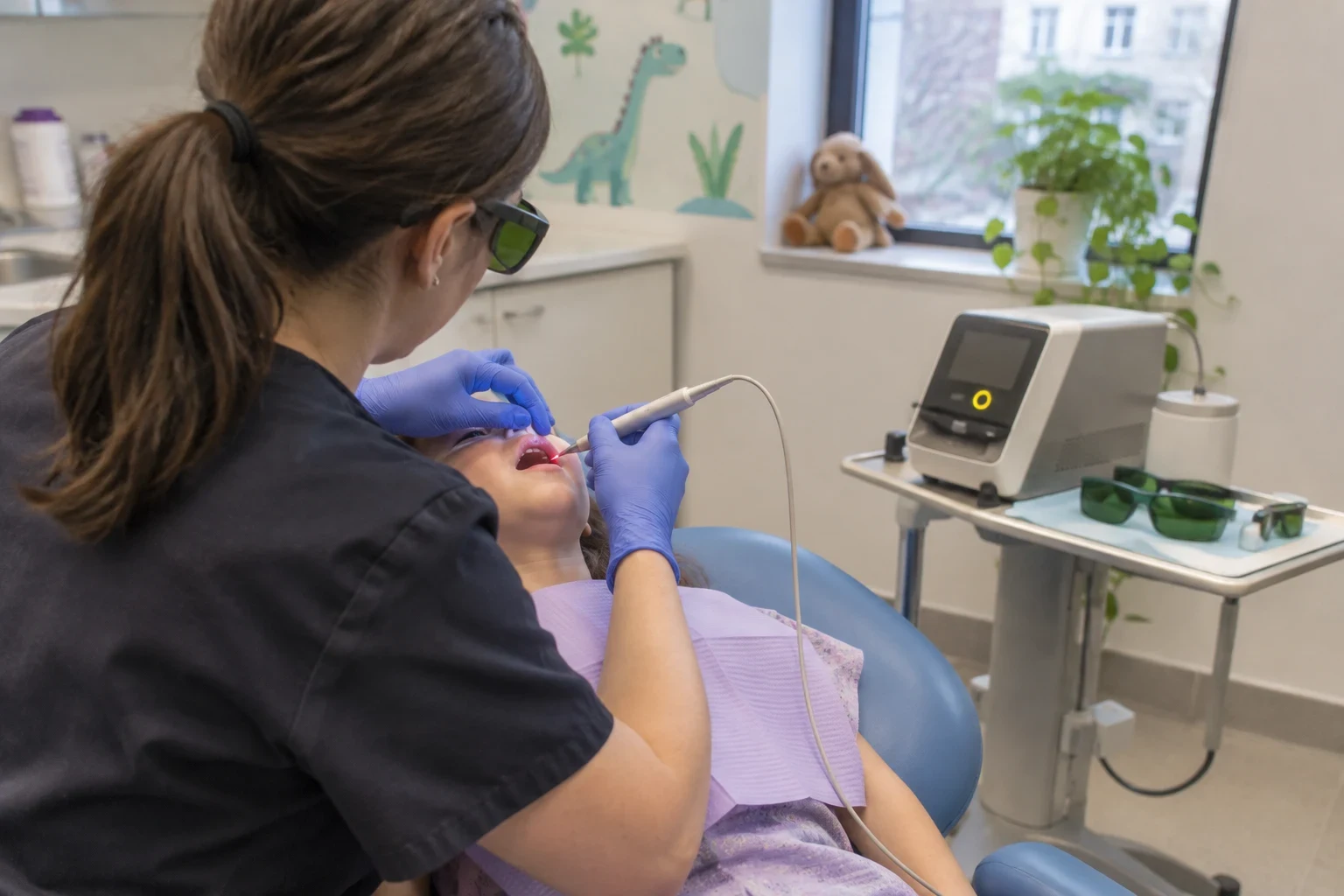
When a frenectomy is the right call
Every child has frenums. The lingual frenum is the thin fold connecting the underside of the tongue to the floor of the mouth, and the labial frenum links the upper lip to the gum above the front teeth. Trouble starts only when one of these folds is too short, too thick or anchored too far forward. Then it holds back the tongue's lift or the lip's movement, and we call it a tongue-tie or a lip-tie.
The procedure itself is brief: we free or remove the restricting band. Our decision rests on how the tissue works, not how it looks. A prominent frenum that still lets your child feed, talk and keep teeth clean stays as it is. One that tugs on the gum, holds plaque against the teeth or keeps the tongue from reaching the roof of the mouth deserves attention, since that strain adds up year after year.
We see it as upkeep for the whole mouth. A free-moving tongue clears food from the back molars, and a lip that lifts fully lets saliva wash over the front teeth. Both make the results of Exams & Cleanings last longer between appointments.
What the work includes
- Functional assessment
- We look at how far the tongue lifts, extends and moves side to side, and how the upper lip flips up. For babies we ask about latch, feeding length and any clicking sounds. Measurement of movement guides the plan, not the look of the tissue.
- Coordination with your care team
- Tongue-ties often involve a lactation consultant, pediatrician or speech therapist. With your permission we share findings so everyone works from the same picture.
- Local numbing and the release
- We numb the area with topical or local anesthetic, then release the band with a small, precise incision. Most releases take only a few minutes of chair time.
- Aftercare instructions and stretches
- The mouth heals fast, and a released frenum can reattach if the wound edges knit back together. We show you the gentle stretches that keep the area open and explain how often to do them.
- Follow-up check
- We look at healing at a follow-up visit to confirm the tissue is closing the right way and that movement has improved.
Signs your child may have a tongue-tie or lip-tie
Hard feeds for your baby
Watch for a latch that slips, a clicking noise at the breast or bottle, feeds that drag on and still end in hunger, or sore nipples for the nursing parent. Each can mean the tongue cannot move freely.
A notched tongue tip
When your child pushes the tongue out, the tip pinches into a heart or V shape because the frenum is holding its center down.
Trouble with certain sounds
L, t, d, n and r all need the tongue tip to reach the ridge just behind the upper teeth. Speech therapists often spot a tie before anyone else does.
Plaque at the upper front gumline
A tight lip frenum keeps the lip from rising, so neither saliva nor bristles reach that strip of gum. Decay in that spot is a frequent reason we check for a lip-tie.
A gap or gum tugging up front
A heavy labial frenum can wedge the upper front teeth apart or pull the gum back from the tooth each time the lip moves.
What moves the cost of a frenectomy
Two things shape the total: which attachment we release and how much comfort support your child needs while we do it. We walk you through the plan and every line item before any work begins, so the bill lines up with what we discussed in the chair. Our office takes Visa, MasterCard and Discover cards, works with most insurance plans, and offers the CareCredit Patient Payment Plan for parents who prefer to pay over time.
Tongue, lip or both
Releasing only the lingual frenum, only the labial frenum, or both at one visit changes the chair time and the steps involved.
Your child's age and comfort plan
A baby treated with topical gel is a different visit from a school-age child who needs local anesthetic, or a very anxious kid who may need sedation.
What your plan covers
Some insurers pay for a frenectomy when a feeding or speech problem has been documented. We help you sort out what paperwork your plan expects.
Healing visits
Follow-up checks add to the total, and so does the occasional touch-up when tissue grows back together.
How the visit runs
- 1
Evaluation and talk-through
We examine the frenum, test movement and hear what you have noticed at feeds or at the table. If release will help, we explain exactly which band and why.
- 2
Comfort and numbing
Your child stays comfortable with numbing gel or local anesthetic. For older kids who are very anxious, we can discuss options on our Sedation Dentistry page.
- 3
The release
We release the tissue and check right away that the tongue or lip moves further. Babies can usually feed soon afterward.
- 4
Home stretches
You do short, gentle stretches several times a day for a few weeks. This is the part that keeps the result open long term.
- 5
Healing check
A white or yellow patch at the site is normal healing tissue. We confirm at follow-up that it is closing without reattaching.

Parents' questions about frenectomies
Will my child feel pain during a frenectomy?
We numb the tissue before we start, and the release itself takes very little time. For a few days afterward the spot feels tender, similar to a scrape inside the cheek. Most kids are back to normal meals in a day or two, and babies can usually nurse or take a bottle shortly after.
Does the release correct speech by itself?
Not in every case. Freeing the frenum gives the tongue more range, but the muscles still need practice using it. Many kids make the most progress when a speech therapist works with them after healing.
Why do we have to keep doing stretches?
Tissue inside the mouth closes fast. If the wound edges are left alone, they can knit back together and rebuild the same tight band. A few weeks of gentle daily stretching keeps the new range open.
Is it okay to leave a lip-tie untreated?
In many kids, yes. The upper lip frenum often thins and moves up as the jaw grows. We suggest a release when it holds plaque against the gums, tugs the gumline or interferes with feeding.
Can families from nearby towns come in?
Yes. We see kids from Cambridge, Medford, Arlington and other towns around Somerville. Everyone starts the same way, with an evaluation appointment.
Find out if a release will help
We check movement first and give you a clear yes or no. If your child is new to us, we can set up registration on the same call.