ServicesSealants
Dental Sealants for Kids in Somerville
The pits on a molar's chewing surface are often narrower than a single toothbrush bristle, so plaque sits there untouched. We fill those pits with a thin hardened resin, then inspect it at every checkup so your child's healthy teeth stay covered for years.
How Sealants Protect the Back Teeth
The biting surface of a molar is a landscape of ridges, pits and narrow fissures. Plaque collects at the bottom of those channels, deeper than a bristle can travel. Bacteria living there break down sugar into acid, and the acid softens enamel from the floor of the groove upward. That explains why the tops of back teeth are the most common place for a child's first cavity, even when brushing at home is consistent.
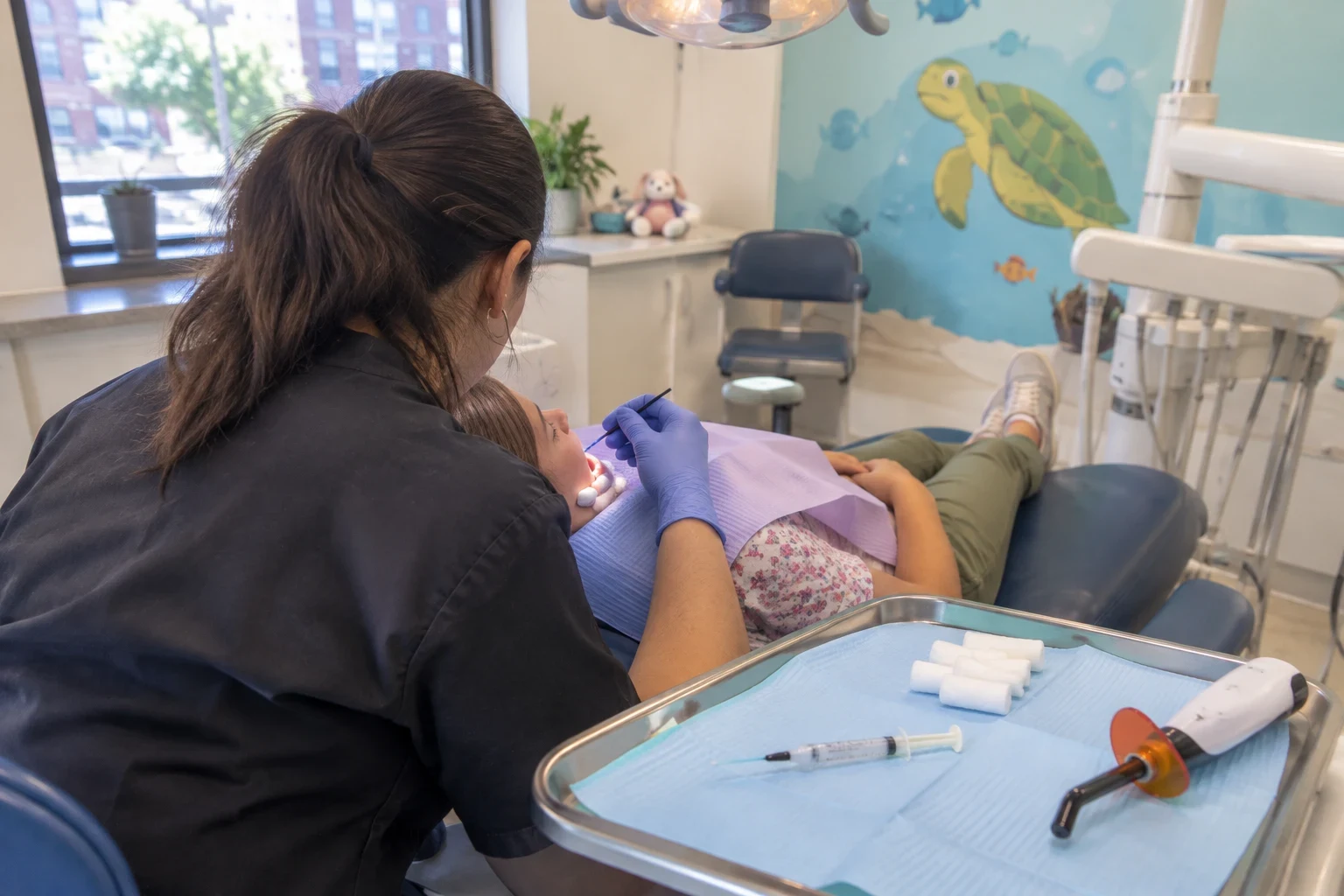
A sealant starts as a liquid resin. It flows down into the fissures and hardens under a curing light, leaving a smooth, shallow surface a toothbrush can clean in a single stroke.
We treat sealants as something to keep up over the years. Chewing slowly wears the resin, so we check each one during your child's regular exams and cleanings and fill in thin spots as they show up. Maintaining the sealant already in place guards the tooth better than letting it wear through and starting over.
What Sealant Treatment Includes
- Checking each groove before sealing
- We look closely at every fissure for early decay first. Covering an active cavity would seal it in, so any soft or discolored area is evaluated before material goes on.
- Polishing and conditioning
- A polish clears plaque from the chewing surface. A mild etching gel follows for a brief moment, roughening the enamel at a microscopic level so the resin has something to grip.
- A dry working surface
- Moisture is the most common cause of an early sealant loss because it weakens the grip between resin and enamel. Cotton rolls and suction keep saliva away for the few minutes the step takes.
- Flowing and hardening the resin
- We brush the liquid sealant into each pit and fissure, then set it in seconds with a blue curing light. No shots, no drill and no tooth structure removed.
- Adjusting the bite
- Your child bites down on thin marking paper, and we smooth any spot that sits high so the teeth meet the way they did before.
- Follow-up at every exam
- Each checkup includes a look for chipped edges, worn spots or gaps along the margin, and we add resin wherever the layer has thinned.
Signs Your Child Is Ready for Sealants
Six-year molars have erupted
The first permanent molars generally appear around age 6, just behind the baby teeth. Sealing them shortly after they come in fully, while the fissures are still clean, gives the best result.
Twelve-year molars are coming in
The second set of permanent molars shows up around age 12. Their grooves are just as deep, and their spot at the very back makes them easy to skip with a toothbrush.
Grooves look dark or catch food
A brown or black line along a fissure may be surface stain or early decay. Either way, grooves that trap food are worth a closer look at the next visit.
Past cavities, even in baby teeth
Children who have needed fillings before often carry that risk to their new permanent teeth. Sealing those teeth early helps break the pattern.
Braces, frequent snacks or brushing battles
Orthodontic brackets, all-day grazing or a child who fights the toothbrush all make it more likely that plaque stays parked in the grooves.
How a Sealant Visit Goes
- 1
Exam and plan
We look at each molar and premolar and tell you which teeth are good candidates and which, if any, need treatment first. You hear the reasoning for each tooth.
- 2
Clean, etch and rinse
The chewing surface is polished, conditioned with etching gel, rinsed and dried. Kids often describe the gel as tasting a little sour.
- 3
Place and cure
We flow the sealant into the grooves and set it with the curing light. Most teeth take only a few minutes each, and your child can eat normally afterward.
- 4
Check at future visits
Every exam includes a look at the sealants. Worn or chipped areas get a quick top-up so the original coverage lasts.
What Affects the Cost of Sealants
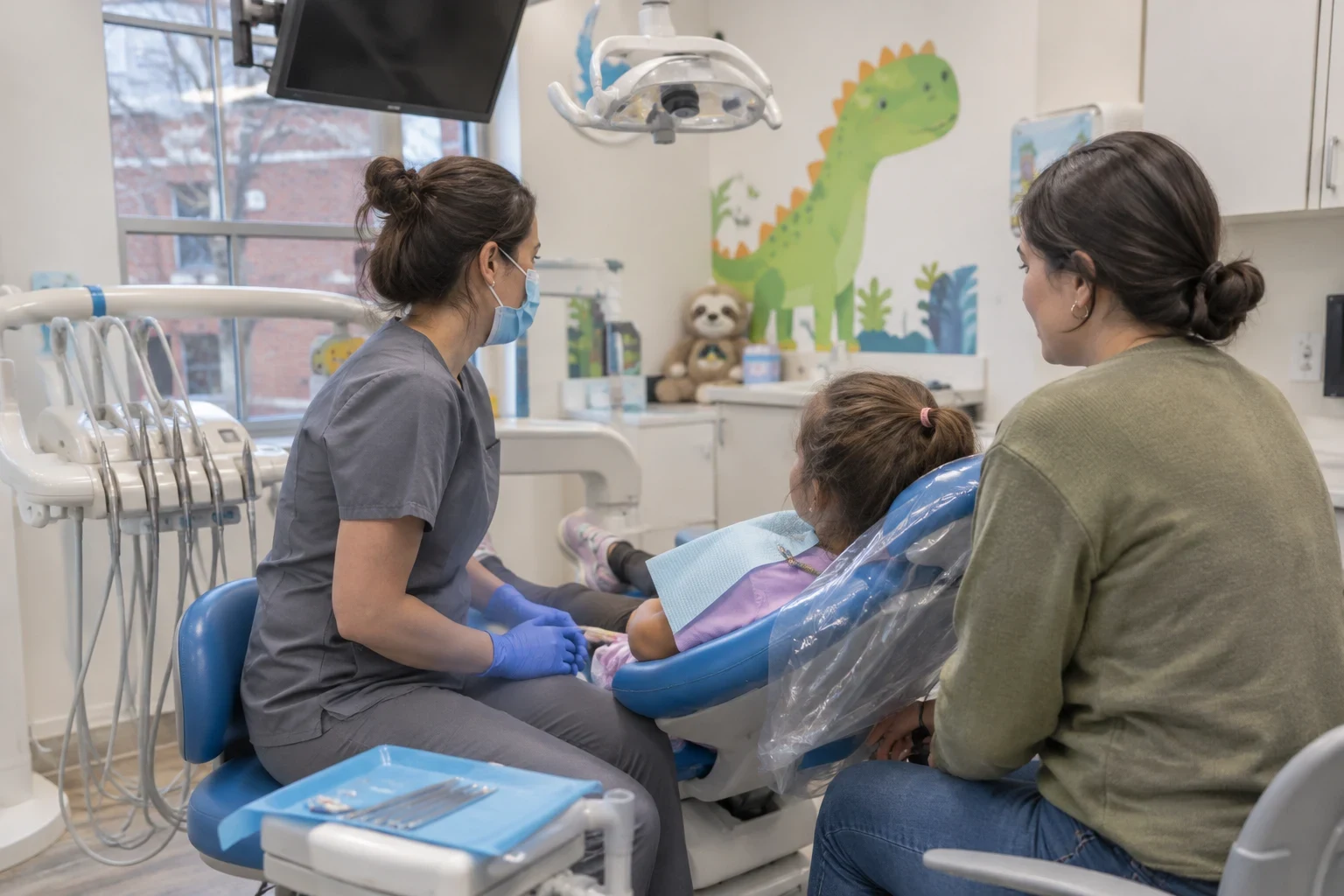
A sealant visit is quick and simple, but the total still differs from one child to the next. Before any resin goes on, we show you which teeth we plan to seal and explain why each one made the list. CareCredit Patient Payment Plan is available, and we work with most insurance plans. Payment can also go on MasterCard, Visa or Discover.
- How many teeth get sealed
- Sealants are usually charged per tooth. A six-year-old with four fresh molars needs far less chair time than a preteen getting all eight molars plus a few premolars covered.
- What your plan covers
- Many dental plans pay for sealants on permanent molars, though age limits and tooth restrictions are common. We can help you figure out what your plan allows before the visit.
- A groove that already has decay
- If a fissure shows a small patch of softened enamel, that spot may need a conservative filling first, or instead of a sealant. That changes the work and the cost.
- Touch-ups down the road
- Adding resin to a worn sealant is a small job. Treating a cavity that grew under a sealant no one checked is a bigger one, which is why we look at every sealant at each visit.
Questions Parents Ask About Sealants
Something not covered here? (617) 668-1163
Will my child feel any pain during a sealant?
Not in the usual sense. Nothing is numbed, nothing is drilled and no tooth structure is taken away. Most kids only remember the slightly sour conditioning gel and the blue light we hold near the tooth.
How long will a sealant keep working?
A well-placed sealant can guard a tooth for several years. Daily chewing gradually wears the surface, and crunchy or sticky foods can chip an edge. We inspect every sealant at each exam and add material once it thins, so the coverage holds instead of failing quietly.
Do baby molars ever need sealants?
In some cases, yes. Primary molars have fissures as well, and a child with especially deep grooves or a cavity history can benefit. We make that call one tooth at a time based on what the exam shows.
Is there BPA in sealants?
Certain resins may give off a tiny trace right after placement, well under what kids pick up from ordinary daily sources. A rinse after the procedure lowers it more. We are happy to explain the specific material we use if you would like.
Can sealants take the place of fluoride or brushing?
They cannot. A sealant covers only the chewing grooves. Fluoride treatment hardens the smooth sides of each tooth, and brushing and flossing clear plaque between teeth, so the three work as a set.
Seal the Grooves Before Decay Starts
If your child has new molars coming in, a sealant visit can usually be paired with a regular checkup. Families from Somerville, Cambridge and Medford can set up an appointment or new patient registration by phone.