ServicesFluoride Treatment
Fluoride Treatment in Somerville
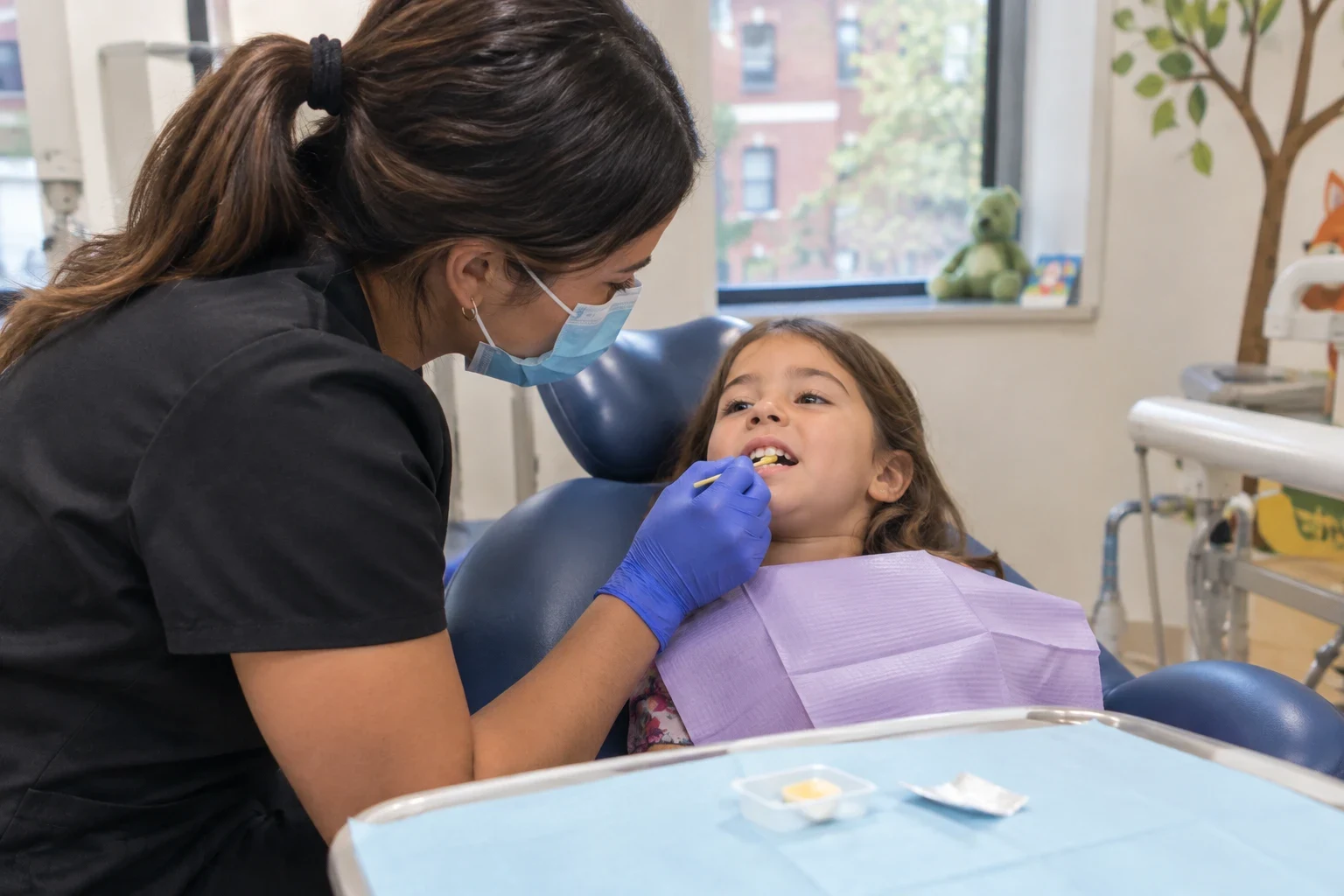
A fluoride varnish takes about a minute to paint on and keeps working for hours after your child leaves. It helps enamel take back the minerals that acid pulls out, so small weak spots harden instead of turning into cavities that need fillings.
What fluoride varnish does for your child's teeth
Plaque bacteria feed on the sugars in food and drink and give off acid as a byproduct. That acid strips calcium and phosphate from the outer enamel, which dentists call demineralization. Saliva slowly returns some of that mineral, but frequent snacks, juice and a bottle of milk at bedtime can leave the teeth losing more than they gain. Varnish pushes things the other way. Fluoride becomes part of the enamel crystal as fluorapatite, a form that resists acid better than the mineral it replaces.
Baby teeth have a thinner enamel layer than adult teeth. A permanent molar that erupted recently also has enamel that has not finished hardening. Both are most vulnerable during their first few years. Applying varnish on a schedule through that window is maintenance: it reinforces the teeth your child already has so baby teeth hold up until they fall out naturally and adult teeth stay sound for life.
Somerville's tap water is fluoridated, which supports teeth from within. A professional varnish coat adds a concentrated dose on the outer surface, which is where decay starts.
What happens during a fluoride treatment
- Checking for early mineral loss
- We first scan the teeth for dull, chalky white areas, which are the first visible clue that enamel is losing minerals. These spots often firm up again with fluoride, so we note their location and look at them again next time.
- A dry tooth surface
- A few seconds with gauze or a cotton roll removes saliva from the teeth. Varnish grips dry enamel far better than wet.
- A thin coat on every tooth
- A small soft brush spreads the varnish across each tooth. It sets as soon as saliva touches it, so your child does not have to bite on a tray or try not to swallow.
- Aftercare spelled out
- You leave knowing what to avoid and for how long, typically hard, sticky or hot foods, plus skipping brushing until later that day. This keeps the fluoride on the enamel long enough to absorb.
- How often to come back
- For most kids, varnish happens at their usual exams and cleanings. If your child has had cavities or shows white spots, we may recommend coats more often and explain the reasoning.
When a fluoride treatment makes sense
Dull white patches by the gums
Chalky areas along the gumline show that enamel has already lost mineral. At this early point, fluoride can often firm them up so no drilling is needed.
A recent cavity
If decay appeared in the past year, the mix of bacteria, diet and saliva in your child's mouth is favoring mineral loss. A varnish coat helps protect the healthy teeth that remain.
All-day sipping or snacking
Milk, juice or crackers spread across the day keep acid levels up for hours. The enamel never gets a long enough break to rebuild.
Braces or a space maintainer
Wires, bands and brackets hold plaque in places a toothbrush struggles to clean. Fluoride lowers the chance of white marks forming around brackets.
Low saliva from medicine
Saliva is the mouth's own mineral supply, so less of it means slower repair. Some asthma and allergy medications reduce flow, so let us know what your child takes.
How the visit goes
- 1
Cleaning comes first
We usually apply varnish right after a cleaning, when plaque is gone and the enamel surface is bare. That lets the fluoride reach the tooth directly.
- 2
About one minute of painting
Your child sits back while we brush the varnish on. It may feel slightly sticky and taste mildly sweet. Babies and toddlers can stay on a parent's lap, knee to knee with us.
- 3
Home with a few simple rules
Your child can drink water and eat soft foods soon after. The thin yellowish film comes off with the next brushing, usually that evening or the following morning.
What moves the price of a fluoride treatment
Varnish is a short, simple procedure, and many dental plans file it under preventive care. What you end up paying depends mainly on your child's coverage and how many coats they need in a year. We accept MasterCard, Visa, Discover, most insurance plans and CareCredit Patient Payment Plan. Ask when you call and we can walk through what your plan usually covers for fluoride.
- Plan limits on age and frequency
- Plenty of insurance plans cover fluoride for children only up to a set age, and only a set number of times per year. An application beyond that count may not be covered.
- Number of coats per year
- A child at higher risk for decay may need varnish more often than twice a year. Every added application is charged as a separate service.
- Checkup visit or separate trip
- Applying varnish during a routine exam and cleaning saves an extra appointment. A visit just for fluoride is short, but it is booked and billed on its own.
- Findings from the exam
- Sometimes the exam shows a cavity, or a molar that would be a good candidate for sealants. Any added work is a separate charge, and we review each item with you before starting.
Common fluoride varnish questions
Something not covered here? (617) 668-1163
How young can my child be for a varnish coat?
We can start once the first baby teeth come in. The amount used is tiny, far less than a milliliter, and it sets on contact with saliva, so your child swallows very little. For babies and toddlers, varnish is a better fit than gels or foams because it stays stuck to the enamel instead of washing off into the throat.
We have fluoridated tap water. Is varnish still worth it?
Yes, in most cases. Tap water delivers fluoride at a low level through the body and saliva. Varnish holds a far stronger dose directly against the enamel for hours. Each does a different job, and many kids on fluoridated water still develop cavities without the surface coat.
Why do the teeth look yellow afterward?
That tint is the varnish itself, a thin resin layer that keeps fluoride in contact with the tooth. It is not staining the enamel. Brushing that evening or the next morning removes it completely.
Does my child need fluoride or sealants?
Often both, because they protect in different ways. Fluoride hardens all enamel surfaces at the chemical level. Sealants are a plastic coating that closes off the deep pits and grooves on molar chewing surfaces that bristles miss. We will point out which teeth would benefit from each.
Can varnish heal a cavity that has already started?
Only at the earliest stage. If the spot is still a chalky white patch with the surface unbroken, fluoride can help it harden again. Once a hole has formed, the lost enamel cannot grow back, and the tooth needs a filling. Regular coats are meant to stop decay before it reaches that point.
Keep your child's enamel strong between checkups
A minute of varnish at each visit protects the teeth your child already has. Give us a call and we will schedule it with their next exam and cleaning, or register your child as a new patient.