ServicesPediatric Crowns
Pediatric Crowns in Somerville
Once decay has hollowed out too much of a baby tooth, a filling has nothing solid left to grip. A crown caps every surface so the tooth keeps chewing comfortably and holding its place. We fit crowns meant to stay put until that tooth is shed on its own.
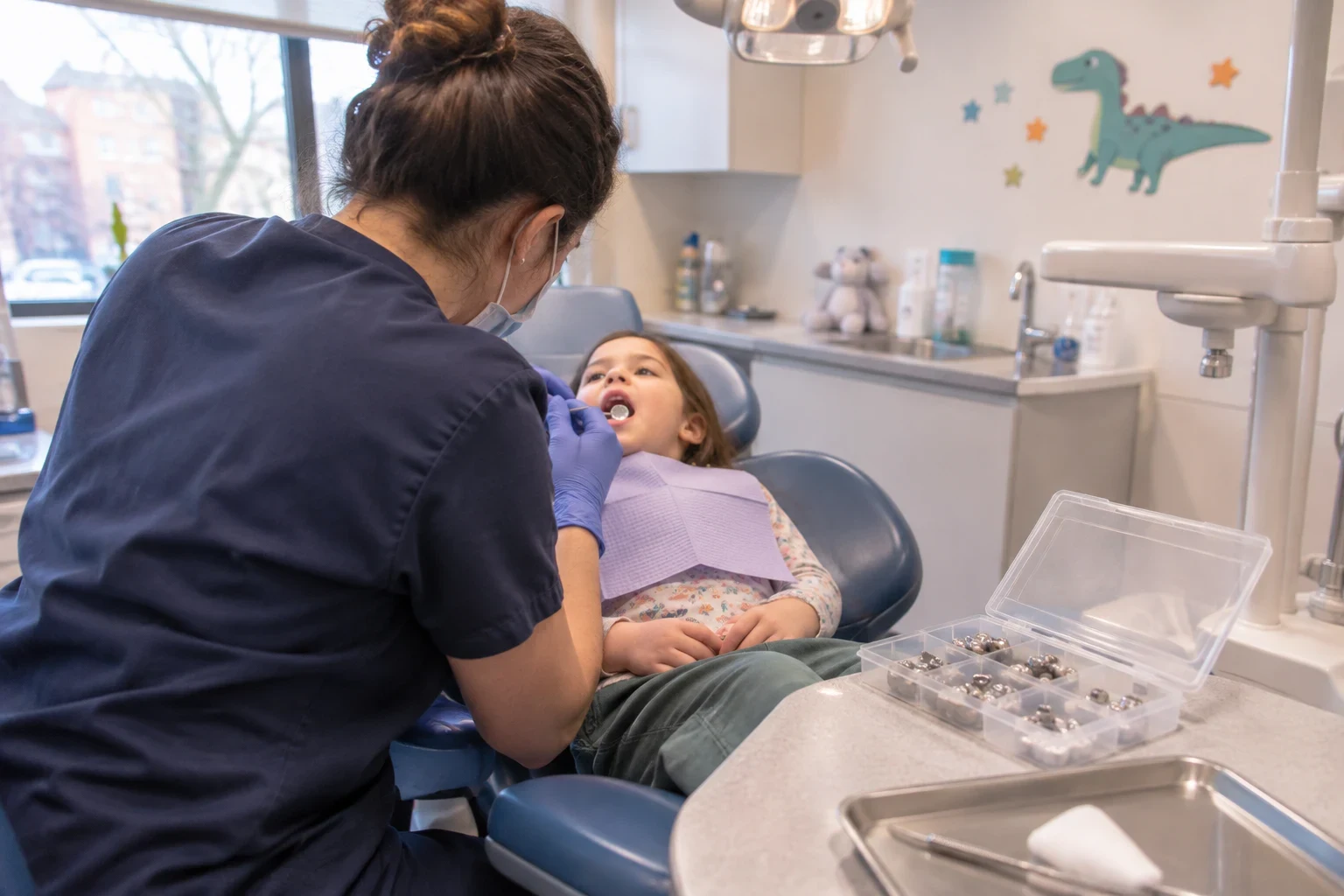
What a pediatric crown does and when it is the right call
A pediatric crown is a cap that covers every surface of a damaged baby tooth. A filling depends on healthy tooth structure around it to stay put. Once decay spreads across two or more surfaces of a primary molar, the remaining walls are thin and a filling tends to crack or leak at the edges. A crown wraps the tooth instead, so biting force is spread over the whole cap rather than a weak patch of enamel.
Baby molars matter longer than many parents expect. The back ones often stay until about age 10 to 12, and they hold the space the adult teeth will need. Losing one early can let neighboring teeth drift, which may later mean a space maintainer. A crown is the upkeep choice: it keeps the original tooth doing its job for the years it has left.
Crowns also often follow other treatment. After a pulpotomy or a baby tooth root canal, the tooth is hollowed and brittle, and a crown seals it so bacteria cannot leak back in.
What our crown care includes
A careful look first
We check the tooth and use X-rays to measure how far the decay reaches and whether it has touched the nerve. That shows us whether a crown alone is enough or pulp treatment has to come first.
Steel caps for molars
For baby molars, the usual choice is a ready-made crown of stainless steel, a method pediatric dentists have relied on for decades. The metal is thin yet tough, and it gives a little as it snaps over the tooth, which is part of how it holds on. Most stay in place until the tooth is shed.
Tooth-colored options
For front teeth or molars that show, we can talk about white crowns such as prefabricated zirconia or composite strip crowns. Zirconia resists stains and wear but needs more tooth reduction and a dry, precise fit, so it does not suit every tooth.
Numbing and comfort
Local anesthetic goes in first, and we confirm the tooth is fully numb before any shaping. For kids who find longer visits hard or need several crowns, our sedation dentistry page covers other options.
Fit and bite check
Each crown is trimmed and contoured so its edge tucks just below the gumline. Then we test your child's bite so nothing sits high or catches during chewing.
Signs your child's tooth may need a crown
A large or spreading cavity
Decay that covers the chewing surface and wraps down the sides of a molar usually leaves too little sound enamel to support a filling.
Repeat filling trouble
When a tooth already has a filling that has cracked, chipped or picked up new decay at its edges, a crown is often the longer-lasting answer.
Pain with chewing or sweets
If your child flinches at candy or cold drinks, or avoids biting down with one part of the mouth, the decay may be nearing the pulp inside the tooth.
Dark or crumbling enamel
Brown, gray or chalky patches, or bits breaking off the tooth, point to weak structure underneath.
Recent nerve treatment
A tooth that just had a pulpotomy or root canal needs full coverage to stay sealed and strong.
Enamel that formed weak
Some kids are born with thin or poorly mineralized enamel. Crowns can shield those teeth from wearing down quickly.
How a crown visit goes
- 1
Explain it to your child
We talk through each step in kid-friendly words and let your child see the crown first. Kids who know what is coming usually sit more comfortably.
- 2
Numb and isolate
Once the tooth is numb, we isolate it to keep saliva away from the cleaning and the cement. A dry field matters most with tooth-colored crowns.
- 3
Remove decay and shape
All the soft, decayed tooth is cleared away, and the outer walls are gently reduced so the crown can slip over. If the nerve is affected, we treat it at this stage.
- 4
Size, seat and cement
We try sizes until one fits snugly, refine the edges, then cement it, often with a glass ionomer cement that releases fluoride along the margin.
- 5
Aftercare and follow-up
The lips and cheeks can take a few hours to lose their numbness, so keep an eye out that your child does not bite them. We check the crown at regular exams and cleanings until the tooth is ready to come out.
What affects the cost of a pediatric crown
We can give you a cost once we know what the tooth needs, which means after the exam and X-rays. Most of the difference between one child's crown and another's comes from the material and any work the tooth needs before the crown goes on. When it is time to pay, you can use MasterCard, Visa or Discover, most insurance plans, or the CareCredit Patient Payment Plan.
- Crown material
- Stainless steel crowns are usually the most straightforward. Zirconia and other tooth-colored crowns take more chair time and material, and insurance plans may treat them differently.
- Nerve treatment first
- When decay has reached the pulp, a pulpotomy or root canal becomes an added step before the crown is placed.
- How many teeth
- Crowning several teeth in one visit changes the length of the appointment and how we plan for your child's comfort.
- Sedation needs
- Nitrous oxide or another form of sedation adds to the visit and is planned on its own when it helps your child.
- Your insurance plan
- Plans differ on how they cover pediatric crowns and which materials they include. We can walk you through what your plan lists so the numbers make sense ahead of time.
Questions parents ask about pediatric crowns
Something not covered here? (617) 668-1163
Why fix a baby tooth that will fall out anyway?
The back baby molars often hang on until a child is somewhere between 10 and 12. That leaves years of chewing on a tooth that is already breaking down. Untreated decay can become an infection, cause pain and disturb the adult tooth forming underneath. Keeping the tooth holds the space for its replacement and lets your child eat normally in the meantime.
Will the crown fall out with the tooth?
Yes. The crown stays attached to the baby tooth. As the root dissolves and the tooth gets loose, the two come out together, and the adult tooth erupts as it normally would.
Does getting a crown hurt?
We numb the tooth with local anesthetic before any work starts, so most kids notice pressure, not pain. The gum tissue at the crown's edge can stay tender for a short stretch, usually a day or two. Soft foods and gentle brushing help it settle.
How long does a pediatric crown last?
Stainless steel crowns on baby molars commonly stay on until the tooth is lost naturally. Tooth-colored crowns can last just as long when the fit and bite are correct. We look at every crown during routine exams.
How should we care for a crowned tooth?
Brush twice a day right along the line where the crown meets the gum, and floss between the teeth. Taffy and other sticky candies can tug on a crown, so keep them occasional. Regular cleanings and fluoride treatment help protect the teeth next to it.
Keep that baby tooth working until it is ready to go
If a filling has failed or a cavity looks large, we can examine the tooth and tell you whether a crown is the right step. New patients can register on the same call.